

Longevity,measured, not guessed.
Longevity care is mostly about the basics done well and measured over time: heart and metabolic markers, sleep, strength and recovery. These guides explain which tests are worth tracking, how often, and where newer therapies sit on the evidence scale.
Several therapies discussed here are compounded and not FDA-approved, and human evidence for some is early. We say so on every page where it applies.
Ready to talk to a provider?
An independent licensed provider reviews your history and decides whether treatment is appropriate.
Explore longevity care →Guides
28 articles, newest additions included automatically.

Longevity · 9 min
NAD+ Therapy: The Hype, the Evidence, and the Gaps
NAD+ is the most searched longevity compound of the year and one of the least understood. Here is the honest state of the evidence, in plain language, from a program that offers it.
Read the guide →
Labs & Biomarkers · 9 min
ApoB and Lp(a): The Heart Markers Standard Tests Miss
A standard cholesterol panel can read normal while the markers that actually predict heart risk are high. Here is what ApoB and Lp(a) measure and why the longevity field has made them standard.
Read the guide →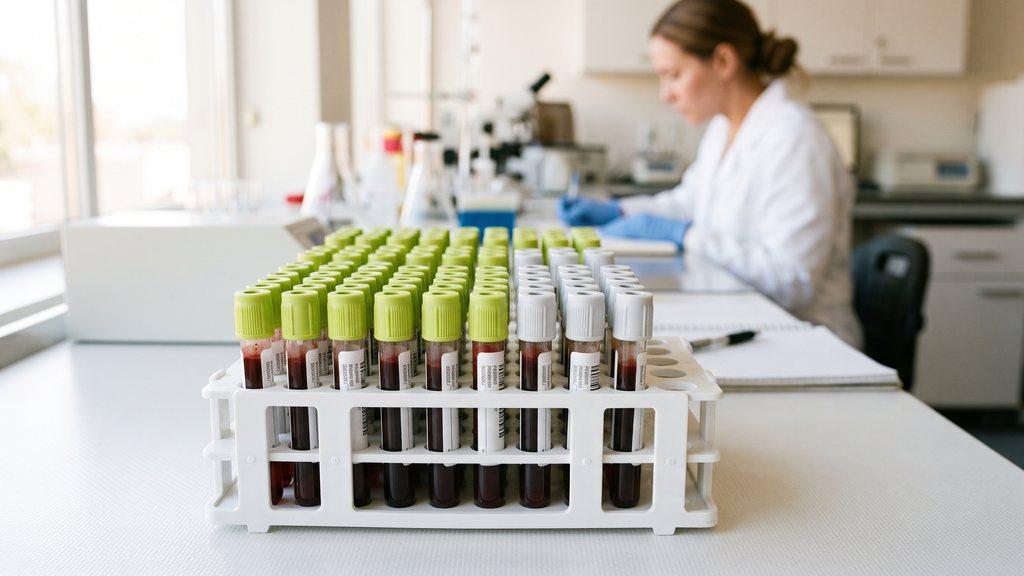
Labs & Biomarkers · 8 min
Metabolic Health Blood Markers: What Each One Tells You
HbA1c, fasting glucose, triglycerides, ApoB, hs-CRP — here's what each metabolic marker reflects, in plain language, and why to measure before a protocol.
Read the guide →Labs & Biomarkers · 8 min
What Does a 62-Biomarker Blood Panel Measure?
A full biomarker panel measures every major system in one draw — heart, metabolic, thyroid, hormones, vitamins and organs. Here's what each section tells you.
Read the guide →
Labs & Biomarkers · 7 min
How Often to Get Blood Work on a Treatment Protocol
On a treatment protocol, labs become a monitoring tool: a baseline, an early follow-up, then periodic panels. Here is how that cadence works and why trends matter.
Read the guide →Labs & Biomarkers · 7 min
At-Home Lab Testing: How It Actually Works
At-home lab testing means collecting a small blood sample yourself and mailing it to a certified lab — how it works, where it's available, and its accuracy.
Read the guide →
Longevity · 7 min
What Is Longevity Medicine? A Plain-Language Guide
Longevity medicine is proactive, biomarker-first care aimed at extending your healthy years. Here's what protocols involve — and what the field can't promise.
Read the guide →
Energy & Sleep · 8 min
Why Am I Always Tired? What Blood Tests Can Reveal
Fatigue often has a measurable cause: iron, B12, vitamin D, thyroid, blood sugar or cortisol rhythm. Here's what a panel can surface — and when to act fast.
Read the guide →
Recovery · 8 min
Recovery Protocols for Athletes and Active People
Recovery is where training actually pays off — adaptation, tissue repair, sleep and load management. Here's what's measurable and where physician care fits in.
Read the guide →
Energy & Sleep · 6 min
How Sleep Quality Affects Overnight Recovery
Deep sleep is when your body repairs; REM is when your mind consolidates. Here's how sleep quality drives recovery — and what to do when yours isn't working.
Read the guide →
Longevity · 8 min
Biological Age: How It's Measured and What Moves It
Biological age estimates how old your body behaves. How it is measured, how far to trust a number, and what moves it.
Read the guide →
Longevity · 8 min
Glutathione, L-Carnitine and B12 Shots: The Evidence
Three popular wellness shots, three evidence stories: what each is approved for, what trials show, and when to test first.
Read the guide →
Labs & Biomarkers · 8 min
Labs to Get Before and During GLP-1 Treatment
A baseline panel before a GLP-1 sets your starting point, flags risks and shows progress. The markers that matter and when to recheck.
Read the guide →
Labs & Biomarkers · 8 min
Labs to Monitor on TRT: Before and During Treatment
TRT starts and continues with lab work: what confirms low T, what is monitored during treatment, and why each test matters.
Read the guide →
Labs & Biomarkers · 8 min
Insulin Resistance Blood Tests: What Shows It Early
Glucose and A1c are late signals. Insulin resistance shows first in insulin, triglycerides, HDL and liver enzymes.
Read the guide →
Labs & Biomarkers · 6 min
High Prolactin in Men: Causes, Symptoms and Testing
High prolactin can quietly lower testosterone in men. Learn the common causes, which symptoms matter, and how doctors confirm and investigate it.
Read the guide →
Labs & Biomarkers · 6 min
How to Prepare for Blood Work: Fasting, Timing and More
Small things before a blood draw can change your results. Here is what to do about fasting, timing, exercise, supplements and medications.
Read the guide →
Labs & Biomarkers · 6 min
Health Screenings by Age: What Adults Need and When
A decade-by-decade guide to the screenings backed by the US Preventive Services Task Force, and where optional labs like hormones and ApoB fit in.
Read the guide →
Labs & Biomarkers · 7 min
CBC Blood Test Explained: What Each Number Means
The CBC counts your red cells, white cells and platelets. Here's what each line means, the patterns doctors look for, and when a result needs follow-up.
Read the guide →
Labs & Biomarkers · 7 min
Elevated Liver Enzymes: Common Causes and Next Steps
Mildly high liver enzymes are common and usually explainable. Here's what the pattern means, the usual causes, and when a result needs prompt attention.
Read the guide →
Labs & Biomarkers · 7 min
Kidney Function Tests: eGFR, Creatinine, BUN and Urine
eGFR estimates how well your kidneys filter; the urine albumin test shows early damage. Here's how to read both, and what can make creatinine look off.
Read the guide →
Labs & Biomarkers · 7 min
Thyroid Blood Tests Explained: TSH, T4, T3, Antibodies
TSH is the first thyroid test for a reason. Here is what TSH, free T4, free T3 and antibodies each tell you, and what can throw the numbers off.
Read the guide →
Labs & Biomarkers · 7 min
hs-CRP Test: What Your Inflammation Number Means
hs-CRP picks up low-grade inflammation linked to heart risk. Here's how results are grouped, what skews them and how they fit with your other markers.
Read the guide →
Longevity · 7 min
Sarcopenia: Muscle Loss With Age and How to Slow It
Strength fades faster than muscle size as we age, and both predict how well we live later. Here's how sarcopenia is measured and what slows it.
Read the guide →
Labs & Biomarkers · 8 min
Low Ferritin but Normal Hemoglobin: What It Means
Your hemoglobin is normal but ferritin is low. Iron deficiency without anemia is common and can still cause symptoms. What it means and what to do next.
Read the guide →
Labs & Biomarkers · 8 min
Should You Get Your Vitamin D Tested? What to Know
Vitamin D is one of the most ordered lab tests, yet guidelines say most healthy adults do not need it. Who should test and what the number means.
Read the guide →
Labs & Biomarkers · 8 min
Vitamin B12 Deficiency: Symptoms, Tests and Who Is at Risk
Vitamin B12 deficiency can cause fatigue, numbness and anemia, and some common medicines raise the risk. Who should test and how to read a borderline result.
Read the guide →
Labs & Biomarkers · 8 min
PSA Test Explained: What Raises It and When to Screen
PSA is a useful but imperfect prostate test. What raises it, how screening decisions work by age, and what a high result really means.
Read the guide →
Comparisons
Head-to-head guides: how the options differ and who each tends to suit.
- Healthspan vs. Lifespan: The Difference That MattersLifespan is how long you live. Healthspan is how many of those years you're healthy and capable. Here's why the second number is the one you can act on.
- NAD+ Injections vs. NR and NMN: What Each Route DeliversNAD+ can be injected, infused or raised with NR and NMN. What each route delivers, what trials show, and what is unproven.
- Optimal vs. Normal Lab Ranges: What the Evidence SaysA normal lab range describes healthy people, not ideal health. Here is where tighter targets have evidence and where optimal ranges are marketing.
- Vitamin D2 vs. D3: Which Form Raises Levels More?Both forms can correct low vitamin D, but D3 raises blood levels more in head-to-head studies. Here is how they differ and when testing makes sense.
- Cyanocobalamin vs. Methylcobalamin: B12 Forms ComparedMethylcobalamin is marketed as the active form, but the body converts every form of B12 to the same molecules. Here is what actually differs.
- B12 Injections vs. Oral B12: Which Treats Deficiency?Shots have long been the default, but high-dose oral B12 corrected levels as well in small trials. Here is who still needs injections and why.
- Total vs. Free Testosterone: Which Test Matters?Total testosterone is the first test; free testosterone helps when results are borderline or SHBG is unusual. Here is how to read them together.
- HbA1c vs. Fasting Glucose: Which Test Tells You More?Fasting glucose is a snapshot; HbA1c is a three-month average. Both diagnose diabetes, and each can mislead in specific situations.
Medications
Generic-name guides: how each works, approved and off-label uses, side effects and who should avoid it.
 For women
Antioxidant tripeptide (thiol)
Glutathione
An antioxidant the body makes itself. Not FDA-approved for any use; injections are compounded and evidence is limited.
Read the guide →
Mineral (iron replacement)
Iron
The mineral behind red blood cells: who runs low, how ferritin is tested, and how oral and IV iron differ.
Read the guide →
Amino acid derivative (nutrient)
L-Carnitine
A nutrient that shuttles fat into cells for energy: approved for carnitine deficiency, weakly supported for weight loss.
Read the guide →
Coenzyme (vitamin B3-derived); NAD+ precursors include nicotinamide riboside and NMN
NAD+
A coenzyme every cell uses to make energy. Compounded injections are not FDA-approved and human evidence is early.
Read the guide →
Growth hormone-releasing hormone (GHRH) analog
Sermorelin
A GHRH analog that prompts the pituitary to release growth hormone. Once FDA-approved for children; now compounded.
Read the guide →
Vitamin (cobalamin)
Vitamin B12
The nerve- and blood-cell vitamin: who runs low, how deficiency is tested, and how injections, tablets and nasal forms differ.
Read the guide →
Vitamin (fat-soluble secosteroid)
Vitamin D
The bone and calcium vitamin: who runs low, what a 25(OH)D test means, what big trials found, and when too much becomes harmful.
Read the guide →
Tools
Free calculators and symptom checks built on published methods.

TDEE Calculator
Your resting metabolic rate and maintenance calories at every activity level.
Open the tool →
Protein Calculator
Daily protein by goal, including a GLP-1 setting that prioritizes lean mass.
Open the tool →
Water Intake Calculator
Daily water from the National Academies baseline, adjusted for exercise and heat.
Open the tool →
Biomarkers
What each blood test measures, typical ranges and what can move the number.
- Total cholesterol
- LDL cholesterol (LDL-C)
- HDL cholesterol (HDL-C)
- Triglycerides (TG)
- Non-HDL cholesterol (Non-HDL-C)
- Apolipoprotein B (ApoB)
- Apolipoprotein A1 (ApoA1)
- Lipoprotein(a) (Lp(a))
- High-sensitivity C-reactive protein (hs-CRP)
- Hemoglobin A1c (HbA1c)
- Fasting blood glucose (Glucose)
- C-peptide
- 25-hydroxy vitamin D (Vitamin D)
- Ferritin
- Iron, TIBC and transferrin saturation (Iron studies)
- Vitamin B12 (B12)
- Folate
- Alanine aminotransferase (ALT)
- Aspartate aminotransferase (AST)
- Alkaline phosphatase (ALP)
- Bilirubin
- Albumin
- Creatinine
- Estimated glomerular filtration rate (eGFR)
- Blood urea nitrogen (BUN)
These guides are general education, not medical advice. How we research and update them.
Compounded medications are prepared by licensed US compounding pharmacies operating under FDA-regulated 503A or 503B authority. The specific compounded formulation has not undergone separate FDA approval. FDA-approved alternatives may be available; patients should discuss options with their prescribing physician.