Key takeaways
- At-home testing means collecting a small blood sample yourself with a guided kit and mailing it to a certified laboratory — no appointment or clinic visit required.
- State regulations restrict at-home collection in AK, DE, DC, HI, KS, LA, MS and NY — patients there are routed to a nearby in-person draw at no extra charge.
- Certified labs process at-home samples with the same equipment and quality controls as clinic-drawn samples; collection quality is the main variable you control.
- Either way, results don't arrive as a raw PDF — they flow to physician review, which is what turns numbers into an actual plan.
At-home blood testing works like this: a collection kit arrives at your door, you collect a small blood sample following guided instructions, and you mail it to a certified laboratory in a prepaid package — the same lab infrastructure that processes clinic samples, minus the appointment, the commute and the waiting room. For most panels, the entire collection takes a few minutes at your kitchen table.
This guide covers the practical questions: how at-home collection compares to a traditional in-person draw, which states don't permit at-home collection (and what happens instead), what actually determines accuracy, and where your results go once the lab is done with them. Short version — the lab panel is the same; only the first step changes.
At-home kits vs. in-person draws: what's actually different
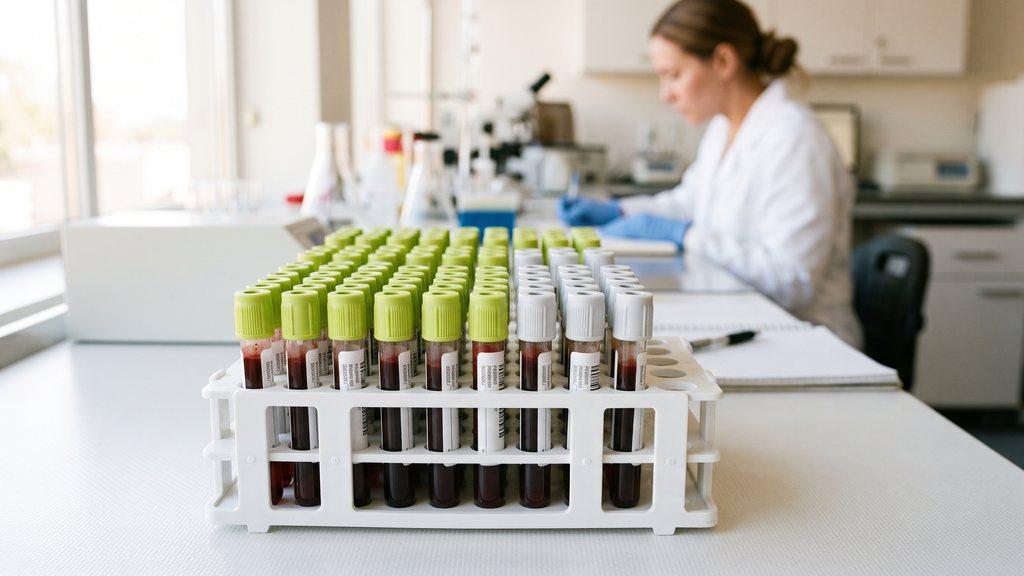
A traditional draw uses venipuncture — a phlebotomist draws blood from a vein into collection tubes. An at-home kit typically uses a small lancet and capillary collection from a fingertip, guided by step-by-step instructions. The sample is smaller, which is why kit-based panels are designed around markers validated for capillary samples.
Each approach has honest trade-offs. At-home wins on convenience and consistency — you can collect first thing in the morning, fasted, without building your day around an appointment, which matters for time-sensitive markers like cortisol. In-person wins on sample volume and breadth: some comprehensive panels, including our largest, are best served by a full venous draw. Neither is 'better' universally; the right method depends on the panel and, in some cases, on where you live.
- At-home kit — guided fingertip collection, a few minutes at home, prepaid return shipping; best for convenience and consistent morning timing.
- In-person draw — venous collection at a partner lab site; best for the largest panels and for anyone who prefers a phlebotomist handle it.
- Either way — the same certified laboratories run the analysis, and the same physicians review the results.
Where at-home collection isn't available — and what happens instead
State regulations govern how lab samples can be collected and ordered, and a handful of states don't currently permit at-home collection kits. If you live in Alaska, Delaware, the District of Columbia, Hawaii, Kansas, Louisiana, Mississippi or New York, your test is routed to an in-person draw instead.
Here's how that works in practice: you receive a lab order for a partner draw site near you — typically a national lab location — walk in or schedule a quick visit, and a phlebotomist collects the sample. Same panel, same certified laboratory processing, same physician review afterward, at no extra charge. It's a different first step, not a different product, and the rest of the process is identical.
Worth knowing: these rules attach to where you physically are when you collect, not where you signed up. If you split time between states or you're traveling for an extended stretch, let your physician know and they will confirm which collection method your current location permits.
How accurate is at-home testing?
The laboratory analysis itself is identical: at-home samples are processed by certified labs on the same analyzers, with the same quality controls, as samples drawn in a clinic. The accuracy question really lives in collection and handling — and that part is substantially in your hands, which is why kits are engineered to make it hard to get wrong.
A few habits protect sample quality more than anything else:
- Follow the fasting and timing instructions — collecting fasted and in the morning, when directed, is what makes your results comparable to reference ranges.
- Hydrate and warm up — being well hydrated with warm hands makes capillary collection faster and yields a better sample.
- Fill to the marked line — underfilled tubes are the most common reason a lab requests a recollection.
- Ship promptly — same-day or next-day mailing in the provided package keeps the sample within its stability window.
What happens if a sample can't be processed?
Occasionally a sample arrives underfilled, delayed or otherwise unusable — it's uncommon, but it happens, and the honest policy is the one worth asking any lab provider about upfront. In that case you're notified and contact your physician and they will arrange the next step — ask about recollection before you order if this is a concern for the lab's inability to process the first attempt.
This is also a fair moment to say who at-home collection isn't ideal for: if you know you struggle with fingertip collection, or your physician wants the broadest possible panel from a single session, an in-person draw is the pragmatic choice from the start. The goal is usable data with the least friction for you — not loyalty to a collection method.
If you're unsure which method suits you, that's a fine question for our FAQ or the care team before you order. Choosing the right collection path upfront is easier than switching after a kit arrives, and it's a decision we'd rather help you make once than have you repeat.
From mailbox to physician review
Once the lab certifies your results, they don't just land in your inbox as a spreadsheet. Results flow to a licensed physician who reviews them against your health history, your symptoms and your goals — the step that separates medical-grade testing from consumer curiosity kits. You see every value, and you also see what a clinician thinks those values mean together, whether that's 'all reassuring, retest in a year' or specific priorities worth acting on.
Turnaround is typically a matter of days from the lab receiving your sample, and your physician keeps you informed as results come in — so there's no wondering where things stand. If anything on the panel warrants a conversation rather than a note, that conversation gets scheduled instead of buried in a results page.
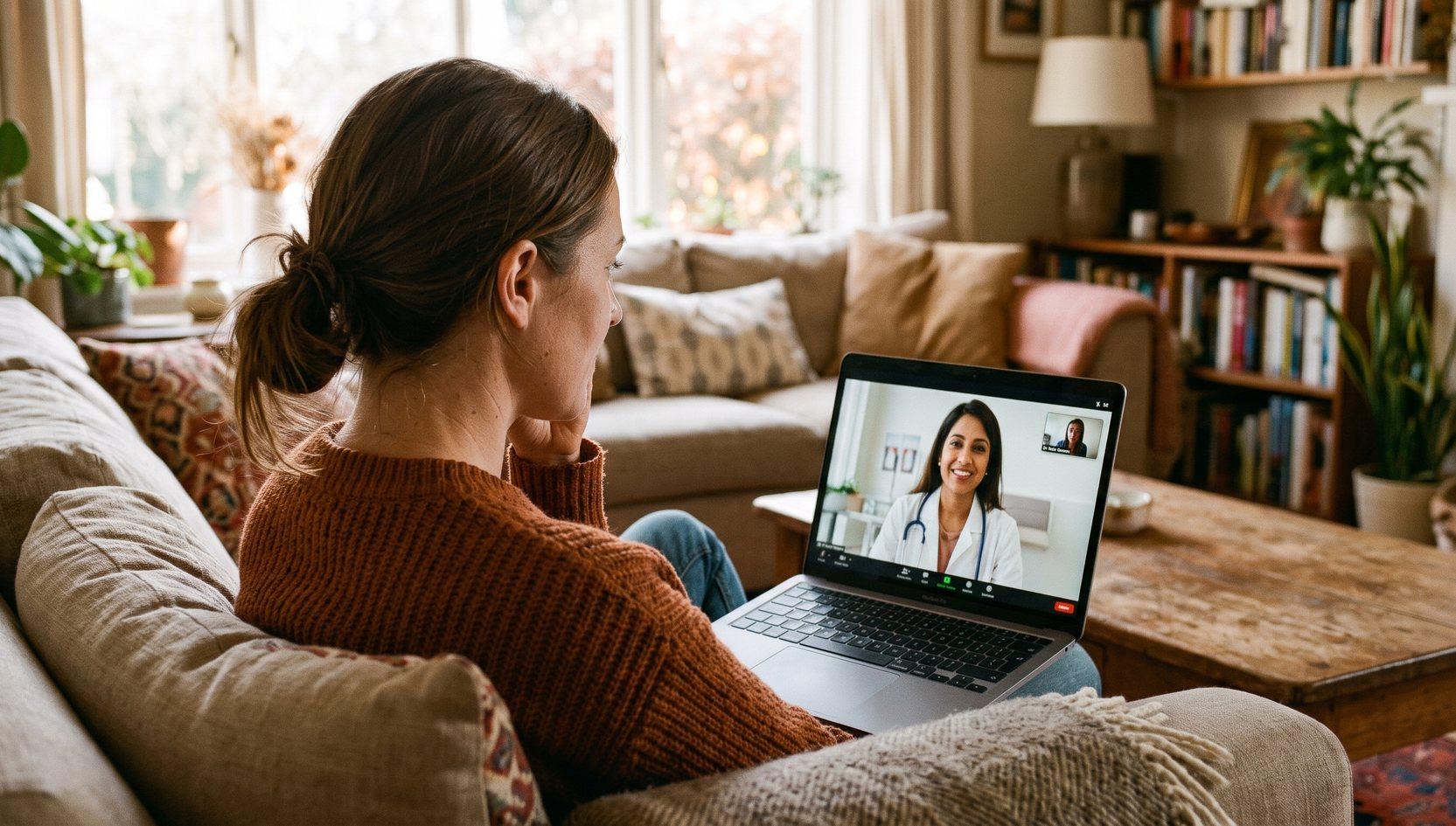
That review is what makes the cadence question — how often to retest — a personalized answer instead of a marketing schedule. And if your results surface something worth a deeper look, like the hormone markers covered in understanding your hormone panel, the follow-up conversation happens with the same physician team, inside the same platform. Collection is the easy part; continuity is the point.
Common questions
Is at-home blood testing as accurate as a lab draw?
The analysis is performed by the same certified laboratories with the same quality controls, so processing accuracy is equivalent. The main variable is collection quality — following the kit's fasting, timing and fill-volume instructions closely is what keeps an at-home sample as reliable as one drawn in a clinic.
What if I live in a state where at-home kits aren't available?
If you're in AK, DE, DC, HI, KS, LA, MS or NY, you're automatically routed to an in-person draw at a partner lab location near you, at no extra charge. The panel, the laboratory processing and the physician review are identical — only the collection step differs.
Do I need a doctor's order for an at-home lab test?
Lab testing on our platform is physician-ordered as part of the service — you don't need to bring your own referral. A licensed physician authorizes the panel, and the same clinical team reviews your results afterward, which keeps the entire loop from order to interpretation under medical supervision.
This article is for general education and is not medical advice. Protocols described here require an online consultation with a licensed provider who will determine if a prescription is appropriate for you. Explore labs & biomarkers options or read the FAQ.