Oral semaglutide is the GLP-1 medication semaglutide in tablet form, taken once a day instead of injected once a week. Lower-strength tablets are FDA-approved for type 2 diabetes, and a higher-strength tablet approved in December 2025 is indicated for chronic weight management and cardiovascular risk reduction in adults with obesity or overweight.
The tablet only works well if it is taken the right way, so this guide spends extra time on the morning routine. It also covers how the pill compares with the injection, side effects, who should not take it, and why compounded oral semaglutide is a different product. Your prescriber chooses the tablet and sets the dose.
At a glance
- Also called
- Semaglutide tablets
- Drug class
- GLP-1 receptor agonist
- Forms
- Oral tablet (once daily, on an empty stomach)
- FDA status
- FDA-approved tablets for type 2 diabetes and for weight management. Compounded oral versions are not FDA-approved.
- Prescription
- Prescription only
- Class: GLP-1 receptor agonist (the same molecule as the weekly injection)
- Form: tablet swallowed whole once a day, first thing in the morning
- Taken with no more than 4 ounces of plain water, then a wait of at least 30 minutes before food, drinks or other pills
- FDA-approved for type 2 diabetes and, at its weight-management strength, for weight reduction and heart-risk reduction
- Same boxed thyroid warning and digestive side effects as injectable semaglutide
How does a GLP-1 work as a pill?
Semaglutide is a peptide, a short chain of amino acids. Peptides are normally broken down by stomach acid and enzymes, which is why most GLP-1 medications are injected. The approved tablets solve this by pairing semaglutide with an absorption enhancer called salcaprozate sodium (SNAC), which helps the medication get through the stomach lining. According to the diabetes tablet label, absorption happens mainly in the stomach, and only about 0.4% to 2% of the semaglutide in a tablet reaches the bloodstream, depending on the product.
Because so little is absorbed, food, drinks or a full glass of water can cut absorption further. That is why tablet strengths are much higher in milligrams than injectable doses, and why tablet and injection doses are not interchangeable milligram for milligram.
Once absorbed, oral semaglutide acts exactly like the injection: it activates GLP-1 receptors in the brain's appetite centers, slows stomach emptying and increases insulin release when blood sugar is high. For a fuller explanation of those effects, see the semaglutide guide.
What is oral semaglutide approved for?
There are two families of FDA-approved semaglutide tablets, with different strengths and indications:
- Type 2 diabetes tablets: approved, alongside diet and exercise, to improve blood sugar control in adults with type 2 diabetes, and to reduce the risk of heart attack, stroke and cardiovascular death in adults with type 2 diabetes at high risk of those events.
- Weight-management tablet: approved in December 2025, alongside a reduced-calorie diet and more activity, to reduce and maintain body weight in adults with obesity, or overweight with at least one weight-related condition, and to reduce the risk of major cardiovascular events in adults with established heart disease and obesity or overweight.
In the trial behind the weight-management approval, adults taking the 25 mg tablet lost an average of 13.6% of body weight over 64 weeks, compared with 2.2% on placebo. Individual results varied.
Taking the lower-strength diabetes tablets for weight loss in people without diabetes is off-label. So is any oral semaglutide product that is not one of the approved tablets, including compounded capsules, dissolving tablets and drops, which are discussed below.
How do you take oral semaglutide?
The approved labels set out a strict routine because absorption depends on it. Once a day, on an empty stomach first thing in the morning:
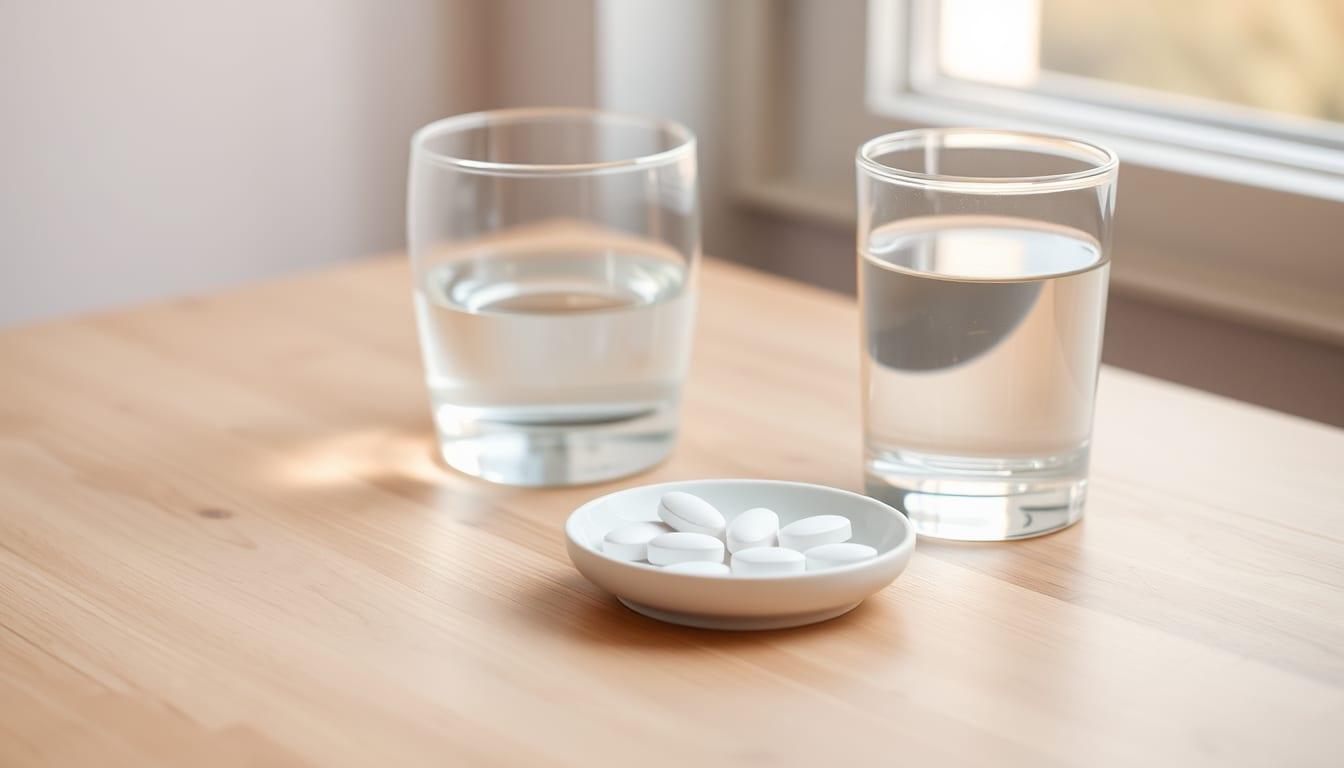
- Swallow the tablet whole with plain water only, no more than 4 ounces (about half a cup). Do not use coffee, juice or other drinks.
- Do not split, crush, chew or dissolve it.
- Wait at least 30 minutes before eating, drinking anything else or taking other oral medicines.
Many people take it on waking and then shower or get ready before breakfast. If you take a morning thyroid pill or other medication with its own empty-stomach rule, tell your provider so they can plan the timing; the label notes that semaglutide tablets increased exposure to levothyroxine in a study.
Like the injection, treatment starts at a low strength and is increased in steps, roughly monthly, to help your stomach adjust. Your provider decides each step. If a dose is missed, the weight-management label says to skip it and take the next one the following day; follow the instructions your prescriber and pharmacist give you for your specific product.
If remembering a daily routine is hard, or you often eat or drink right after waking, a weekly injection may suit you better. Our article on GLP-1 pills vs. injections compares the options in detail.
What are the side effects of oral semaglutide?
Side effects are largely the same as with the injection. In diabetes trials of the tablets, nausea was reported by 11% to 20% of people depending on strength, versus 6% on placebo, with abdominal pain, diarrhea, reduced appetite, vomiting and constipation also more common than placebo. The weight-management label reports that common side effects with the 25 mg tablet were similar in type and frequency to those of the weekly injection, and that 5% of tablet users reported skin sensitivity or tingling (dysesthesia), compared with none on placebo.
Serious risks listed on the labels include pancreatitis, gallbladder problems, kidney injury from dehydration, serious allergic reactions, low blood sugar when combined with insulin or a sulfonylurea, diabetic eye complications in people with type 2 diabetes, a faster resting heart rate, and the risk of breathing in stomach contents during anesthesia. Tell your provider about palpitations at rest, severe or ongoing stomach pain, or any mood changes.
The tablets carry the same boxed warning as the injection: semaglutide caused thyroid C-cell tumors in rodents, and it is not known whether it does in humans. Anyone with a personal or family history of medullary thyroid carcinoma or MEN 2 should not take it.
Who should not take oral semaglutide?
Your provider will check for:
- A personal or family history of medullary thyroid carcinoma, or MEN 2 (contraindicated).
- A past serious allergic reaction to semaglutide or the tablet's ingredients (contraindicated).
- Pregnancy, plans for pregnancy or breastfeeding. Semaglutide should be stopped at least two months before a planned pregnancy because it stays in the body for weeks, and the absorption enhancer has been found to cross the placenta in rats.
- Severe gastroparesis, past pancreatitis or gallbladder disease, and kidney problems.
- Use of insulin or sulfonylureas, thyroid medication, or other drugs where small changes in absorption matter.
- Any other semaglutide product or GLP-1 medication, which should not be combined with it.
Compounded oral semaglutide vs. the FDA-approved tablets
Compounded oral semaglutide is not FDA-approved, and it is not a copy of the approved tablet. Compounding pharmacies prepare oral forms such as capsules, dissolving tablets or liquid drops for individual prescriptions. These products generally do not use the approved tablet's absorption technology, and the FDA has not reviewed whether, or how well, the semaglutide in them is absorbed.
That does not make every compounded product unsafe, but it does mean their effects cannot be assumed from the approved tablet's trials. The FDA does not review compounded drugs for safety, effectiveness or quality before they are dispensed, and it has warned consumers about unapproved semaglutide products. Ask any provider exactly which product you would receive, who makes it, and how they judge whether it is working. Our explainers on compounded medications and compounded GLP-1s in 2026 explain the rules.
How much does oral semaglutide cost?
Insurance coverage depends on what the tablet is prescribed for. Plans are more likely to cover the diabetes tablets for type 2 diabetes than the weight-management tablet for weight loss, and many plans exclude weight medications entirely or require prior authorization. Manufacturer self-pay programs for approved GLP-1 products exist and change often, so check current prices directly.
Compounded oral options are usually sold as cash-pay monthly programs. Compare what is included, and remember that a lower price for a product with unknown absorption is not a like-for-like comparison. See GLP-1 cost without insurance.
Available with a prescription
A needle-free option through American Protocol
Our Oral Metabolic Program is a daily, compounded oral semaglutide option with provider follow-up, dose adjustments and shipping, prescribed only if an independent licensed provider decides it is appropriate for you. Compounded medications are not FDA-approved.
Metabolic Program — Oral: $149 / monthly if prescribed · $49 provider consultation
A licensed provider decides whether any medication is appropriate for you. Not everyone who has a consultation is prescribed medication.
Frequently asked questions
Is there a semaglutide pill for weight loss?
Yes. A once-daily semaglutide tablet was FDA-approved for chronic weight management in December 2025, for adults with obesity or overweight plus a weight-related condition, used with diet and activity. Lower-strength semaglutide tablets have been approved for type 2 diabetes for longer.
Is oral semaglutide as effective as the injection?
At the weight-management strength it comes close. In its 64-week trial, the 25 mg tablet produced average weight loss of 13.6% versus 2.2% on placebo, in the same range as the weekly injection's main trial. Individual results vary, and the tablet only performs as studied when the morning routine is followed.
Why do you have to wait 30 minutes after taking oral semaglutide?
Because food, drinks and other pills reduce how much semaglutide is absorbed. Only a small fraction of each tablet reaches the bloodstream, so the label calls for an empty stomach, up to 4 ounces of plain water, and at least 30 minutes before eating, drinking or taking other oral medicines.
Can I take oral semaglutide with coffee?
No. The labels say to take the tablet with plain water only. Wait at least 30 minutes after the tablet before your coffee, breakfast or other medicines.
Is compounded oral semaglutide the same as the approved tablet?
No. Compounded oral semaglutide is not FDA-approved and usually does not use the approved tablet's absorption enhancer, so it cannot be assumed to absorb or work the same way. It is prepared by a licensed compounding pharmacy for an individual prescription.
Can I switch from semaglutide injections to tablets?
Sometimes. The weight-management label describes how patients on the weekly injection may switch to the tablet, but tablet and injection doses are not equivalent milligram for milligram. Only your provider should plan a switch.
What are the most common side effects of oral semaglutide?
Nausea is the most common, followed by diarrhea, vomiting, constipation, stomach pain and reduced appetite. These are most likely when the dose is increased and often ease over time. See our GLP-1 side effects guide.
Does oral semaglutide interact with thyroid medicine?
It can increase how much levothyroxine your body absorbs, according to the label, and both medicines have empty-stomach rules. If you take thyroid medication, your provider may want to check your thyroid levels and plan the timing of both.
Sources
- Semaglutide injection and semaglutide tablets for weight management: prescribing information (DailyMed). Link (opens in a new tab)
- Semaglutide tablets for type 2 diabetes: prescribing information (DailyMed). Link (opens in a new tab)
- MedlinePlus (National Library of Medicine). Semaglutide (oral). Link (opens in a new tab)
- Wharton S, Lingvay I, Bogdanski P, et al. Oral semaglutide at a dose of 25 mg in adults with overweight or obesity. N Engl J Med. 2025;393:1077–1087. Link (opens in a new tab)
- US Food and Drug Administration. FDA's concerns with unapproved GLP-1 drugs used for weight loss. Link (opens in a new tab)
- US Food and Drug Administration. Drugs@FDA: application 218316, semaglutide tablets for weight management (original approval December 22, 2025). Link (opens in a new tab)
- US Food and Drug Administration. Compounding and the FDA: questions and answers. Link (opens in a new tab)
For education only. This guide is for general education and is not medical advice. It does not replace the prescribing information for your medication or a conversation with a licensed provider, and it does not cover every use, precaution, interaction or side effect. Only a licensed provider can decide whether a medication is appropriate for you and at what dose. If you think you are having a serious reaction or an emergency, call 911.