Oral GLP-1 Pills vs. Injections: What Changed in 2026
Key takeaways
- The first oral GLP-1 for weight management was approved in December 2025; a second, a small-molecule pill with no food or water restrictions, followed in April 2026.
- Oral options have produced meaningful weight loss in trials, but less on average than the strongest weekly injectables.
- The pills trade a needle for a daily habit. One must be taken on an empty stomach with a wait before eating; the newer one does not.
- Side effects are the same family for both routes: nausea, digestive symptoms, usually worst in the first weeks and during dose increases.
- Needle-free compounded oral and dissolving options also exist. They are not FDA-approved and have different evidence behind them.
For most of the GLP-1 era the choice was simple: a weekly injection or nothing. That changed when the FDA approved an oral semaglutide for weight management in December 2025, and again on April 1, 2026, when it approved orforglipron, the first small-molecule GLP-1 pill, taken once daily with no food or water restrictions. Roughly one in nine American adults now uses a GLP-1 medication, and the pills are part of why.
This guide compares the routes on the things that matter to a patient: how much weight people lost in trials, what the daily routine looks like, side effects, cost, and who each option tends to suit. It also explains where compounded needle-free options fit, and why a provider evaluation rather than a preference decides which, if any, is appropriate for you.
The two approved oral GLP-1s, briefly
The first is an oral form of semaglutide, the same molecule as the leading weekly injection, formulated with an absorption enhancer so it survives the stomach. It was already available at lower doses for type 2 diabetes; the 25 mg weight-management dose was approved in December 2025. Because the molecule is a peptide, absorption is fragile: it must be taken on an empty stomach with a small sip of water, followed by a wait of about half an hour before eating or taking other medications.
The second is orforglipron, a small molecule rather than a peptide, approved on April 1, 2026 under an FDA priority review. Its trial reported average weight loss of about 12% at 72 weeks at the highest dose. Because it is not a peptide, it has no food, water or timing restrictions. Published self-pay pricing at launch was around $149 a month through the manufacturer, with insured patients potentially paying less, and Medicare Part D coverage was slated to begin July 1, 2026.
Results: pills versus injections
The headline numbers are not identical, and it is worth being plain about that. In trials, the weekly injectables, particularly the dual-agonist tirzepatide, produced the largest average weight loss. Oral semaglutide at the 25 mg dose came close to its injectable counterpart in its trial. Orforglipron's roughly 12% average sits below the strongest injectables and most reporting has acknowledged that it does not match injectable efficacy.
Averages hide a lot. Individual response varies widely on every one of these medications, and the best medication is the one a patient can take consistently for long enough to matter. A pill that is taken every day will outperform an injection that is abandoned after a month of nausea. That is why the comparison below spends as much time on routine and tolerability as on trial averages. For a plain explanation of how the class works at all, start with how GLP-1 protocols work.
The daily routine, compared
Route is a lifestyle decision as much as a medical one. Here is what each actually asks of you week to week.
- Weekly injection. One subcutaneous injection on the same day each week, with a fine needle into the abdomen, thigh or upper arm. Pens are refrigerated before first use. Most patients describe it as a non-event after the first two or three doses. No daily decision, no food timing.
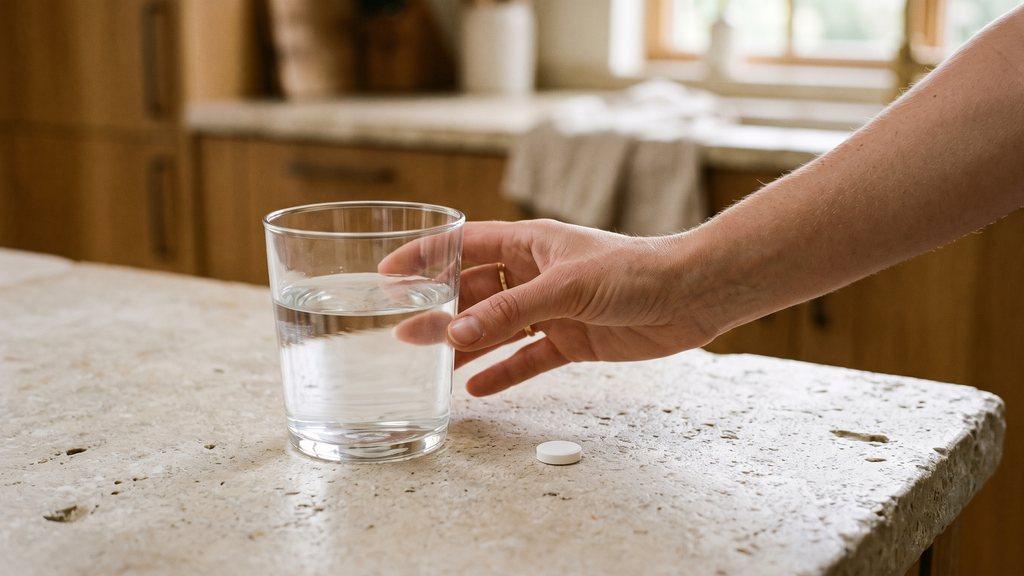
- Oral semaglutide. One tablet every morning, on an empty stomach, with no more than a few ounces of water, then about 30 minutes before food, drink or other medications. For people who take morning medications or eat early, that window is a real constraint.
- Orforglipron. One tablet daily at any time, with or without food. The simplest routine of the three, which is the whole point of its design.
- Compounded oral and dissolving options. Daily tablets or under-the-tongue formulations from compounding pharmacies. Routines vary by product. These are not FDA-approved, which we explain below.
Side effects: same family, different timing
Both routes act on the same receptors, so both share the same side-effect profile: nausea, reduced appetite, constipation or diarrhea, reflux and fullness, usually worst in the first weeks and after each dose increase, then easing. A daily pill delivers a steadier exposure than a weekly peak, which some patients find gentler and others do not notice. The honest answer is that tolerability is individual and that titration, starting low and stepping up slowly, matters more than route.
The more serious cautions are also shared: a personal or family history of certain thyroid cancers, a history of pancreatitis, and pregnancy or planning for it rule these medications out regardless of form. That screening is why a licensed provider reviews your history before any prescription. Our guide to GLP-1 side effects and when to call covers what to expect and what warrants a message to your physician.
Cost and access
The pills arrived into a market where price is the most-asked question. Manufacturer self-pay programs for the oral products launched in the range of roughly $149 to $500 a month depending on product and dose, and insurance coverage for weight management remains inconsistent. Weekly injectables through manufacturer programs sit in a similar or higher range; compounded injectables through telehealth programs have generally cost less.
On this site, the plan price shown for a weight program covers medication, ongoing provider oversight and shipping, and is billed only if a provider prescribes. The only charge at checkout is the provider consultation. We break down every line, including what changes when labs are needed, in how much GLP-1s cost without insurance and on the pricing page.
Where compounded needle-free options fit
Before the approved pills existed, compounding pharmacies filled the needle-free gap with oral tablets and dissolving formulations of semaglutide or tirzepatide. Many telehealth programs, including ours, still offer a needle-free option. It is important to be clear about what these are: compounded medications prepared by licensed pharmacies for individual patients under a provider's prescription. They are not FDA-approved, have not been reviewed by the FDA for safety, effectiveness or quality, and the evidence for oral absorption of compounded peptide formulations is thinner than for the approved products.
That does not make them illegitimate; it makes them a different category with different trade-offs, and a provider should say so plainly. Our explainer on compounded medications and what 503A and 503B mean covers the oversight that does apply, and what changed for compounded GLP-1s in 2026 covers the regulatory picture.
Who tends to suit which route
Patterns a provider sees, with the caveat that the evaluation decides and that none of these are rules:
- Needle aversion that would stop treatment. A pill removes the barrier entirely. The newer small-molecule pill removes the timing barrier too.
- A larger weight goal or a metabolic condition alongside weight. The strongest injectables have the most evidence for the largest effects, and a provider may steer there first.
- Travel, shift work or an unpredictable morning. A weekly injection, or a pill without timing rules, fits better than one that needs an empty stomach and a 30-minute wait.
- Many morning medications. The empty-stomach pill can conflict with them; a provider will look at your list.
- Cost as the deciding factor. Compare the all-in monthly figure across routes, including consultation and shipping, rather than the medication price alone.
What to ask your provider
Bring three things to the evaluation: your medication list, your honest appetite for a daily routine versus a weekly one, and your goal in numbers. A good provider will match route to those, explain the trial evidence for the specific option, tell you what the first month usually feels like, and set the check-in schedule before anything is prescribed. If a program cannot explain why it is recommending a route, or offers only one, that tells you something. Our checklist for vetting a GLP-1 telehealth provider covers the rest.
Common questions
Are the GLP-1 pills as effective as the injections?
Not quite, on average. Oral semaglutide at the weight-management dose came close to its injectable form in trials; the small-molecule pill approved in April 2026 produced about 12% average weight loss, below the strongest weekly injectables. Individual response varies widely, and consistency over time usually matters more than the trial average.
Do I have to take the pill on an empty stomach?
It depends which one. Oral semaglutide must be taken on an empty stomach with a small sip of water and a wait of about 30 minutes before eating or other medications. Orforglipron has no food, water or timing restrictions.
Is a compounded oral GLP-1 the same as the approved pill?
No. Compounded oral and dissolving formulations are prepared by licensed pharmacies for individual patients and are not FDA-approved or reviewed for safety, effectiveness or quality. The approved pills went through full trials. A provider should explain the difference before prescribing either; see our guide to compounded medications.
Can I switch from an injection to a pill?
Often, yes, under a provider's direction. Switching usually means restarting at a lower dose of the new product and titrating up, because tolerability does not transfer one-to-one between routes. Do not switch on your own; a provider on our platform manages the transition and the check-ins.
This article is for general education and is not medical advice. Protocols described here require an online consultation with a licensed provider who will determine if a prescription is appropriate for you. Explore weight & metabolic options or read the FAQ.