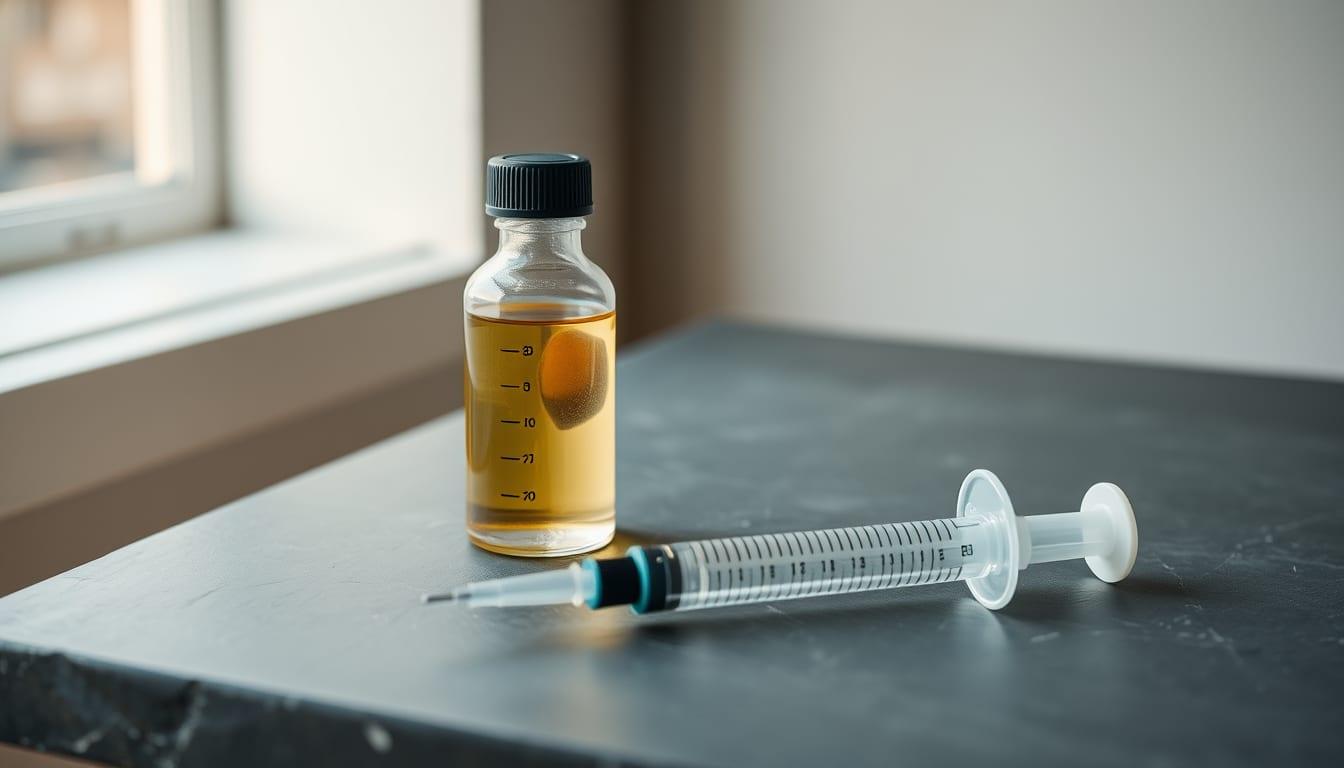
Testosterone cypionate is a prescription form of testosterone, dissolved in oil and given by injection, used to replace testosterone in men whose bodies do not make enough. It is FDA-approved for hypogonadism caused by identifiable problems with the testes or the pituitary gland, and it is a Schedule III controlled substance, so it always requires a prescription and medical monitoring.
This guide explains how testosterone cypionate works, which uses are FDA-approved and which are not, how the injection is given, the side effects and lab monitoring that come with it, its effect on fertility, and who should not use it. A licensed provider decides whether it is appropriate and sets the dose and schedule from your blood work.
At a glance
- Also called
- Testosterone injection, TRT
- Drug class
- Androgen (testosterone ester)
- Forms
- Intramuscular injection
- FDA status
- FDA-approved for male hypogonadism caused by specific testicular or pituitary conditions. Schedule III controlled substance.
- Prescription
- Prescription only
- Class: androgen; a long-acting testosterone ester in oil
- Form: injection into a muscle, given at intervals your provider sets
- FDA-approved for primary and hypogonadotropic hypogonadism; not established for age-related low testosterone alone
- Lowers sperm production, so it is a poor fit for men trying to conceive soon
- Needs ongoing labs: testosterone, hematocrit, and prostate risk assessment
How does testosterone cypionate work?
Testosterone is made mainly in the testes, under instruction from two pituitary hormones: luteinizing hormone (LH), which tells the testes to produce testosterone, and follicle-stimulating hormone (FSH), which supports sperm production. When that system fails, testosterone falls, and symptoms such as low sex drive, reduced energy, loss of muscle and changes in mood can follow.
Testosterone cypionate supplies the hormone from outside. Attaching a cypionate ester makes the molecule less water-soluble, so after an injection into muscle it is released slowly from the oil and converted to active testosterone. That slow release is why it does not need to be taken daily. In the blood, most testosterone is bound to carrier proteins, and the free fraction is the part tissues can use, which is one reason providers sometimes measure free testosterone as well as total.
There is a trade-off built into the mechanism. When the brain senses enough testosterone, it turns down LH and FSH. Less LH means the testes make less of their own testosterone, and less FSH means less sperm. The prescribing information states this directly: sperm production may be suppressed through feedback on the pituitary.
What is testosterone cypionate prescribed for?
The FDA-approved use is replacement therapy in men with symptoms of deficient or absent testosterone due to:
- Primary hypogonadism, where the testes themselves fail, for example after undescended testes, torsion, infection (orchitis) or surgical removal.
- Hypogonadotropic hypogonadism, where the pituitary or hypothalamus does not send the signal, for example from a genetic condition, a pituitary tumor, injury or radiation.
The label adds that safety and effectiveness in men with age-related, or late-onset, hypogonadism have not been established. The FDA required that limitation after reviewing heart-risk concerns in 2015, and kept it in its 2025 class-wide labeling update. In practice, many men treated today have low testosterone without a single clear cause; prescribing for them is a clinical judgment outside the narrow label wording, which is why guidelines put so much weight on confirming the diagnosis first.
The Endocrine Society recommends diagnosing hypogonadism only in men who have both symptoms and consistently low testosterone, measured on a fasting morning blood sample and repeated to confirm. A single low result, or symptoms alone, is not enough. Our low testosterone guide and the free low T symptom check explain what a proper workup looks like.
How is testosterone cypionate given?
The approved route is an injection deep into a muscle, typically the buttock or thigh, from a multi-dose vial with a syringe. Many patients learn to inject at home after instruction. The oil is thick, so the provider or pharmacist will explain needle choice and technique.
Because the drug is released slowly, injections are spaced out rather than daily. How far apart, and how much, is decided by your provider from your symptoms and blood levels, then adjusted at follow-up. Shorter intervals generally mean smaller swings between peaks and troughs. Do not change your dose or timing yourself, and keep testosterone away from children and other people; it is a controlled substance and should never be shared.
Starting therapy is a process, not a single prescription. In our program it begins with baseline labs and a live video visit, and repeat labs follow within the first few months and then at regular intervals.
What are the side effects of testosterone cypionate?
Side effects listed in the prescribing information include:
- Skin and hair: acne, oily skin, increased body hair and male-pattern hair loss.
- Breast and urinary: breast enlargement (gynecomastia), and in older men, prostate enlargement.
- Blood: a rise in red blood cells (polycythemia). This thickens the blood, which is why hematocrit is checked periodically.
- Blood pressure: testosterone can raise blood pressure. The FDA's 2025 review of ambulatory blood-pressure studies confirmed an increase across all testosterone products, and labels now carry that warning.
- Blood clots: deep vein thrombosis and pulmonary embolism have been reported. Leg pain, swelling or warmth, or sudden shortness of breath need urgent care.
- Fluid retention, which can worsen heart, kidney or liver disease; changes in mood, libido or sleep; headache; and pain at the injection site.
- Fertility: reduced or absent sperm production while on treatment.
Heart risk has been debated for years. In the TRAVERSE trial, 5,246 men aged 45 to 80 with heart disease or high cardiovascular risk were randomized to testosterone or placebo; major cardiovascular events occurred in 7.0% and 7.3% respectively, meeting the test for noninferiority. The trial did record more atrial fibrillation, acute kidney injury and pulmonary embolism with testosterone. After TRAVERSE, the FDA removed the boxed-warning language about cardiovascular outcomes from testosterone labels while adding the blood-pressure warning.
Testosterone is also misused at high doses, often with other anabolic steroids, which can cause serious heart and psychiatric harm. Using it only as prescribed, with monitoring, is part of using it safely.
Who should not take testosterone cypionate?
The label lists these contraindications: breast cancer in men, known or suspected prostate cancer, pregnancy, serious heart, liver or kidney disease, and allergy to the product. The Endocrine Society also advises against starting testosterone in men who:
- Plan to father a child in the near term.
- Have a prostate nodule, or a PSA above 4 ng/mL (above 3 ng/mL in men at higher risk) without further urologic evaluation.
- Already have an elevated hematocrit, untreated severe sleep apnea or severe urinary symptoms.
- Have uncontrolled heart failure, a heart attack or stroke in the last six months, or a clotting disorder.
Interactions matter too. Testosterone can increase the effect of oral blood thinners such as warfarin, can lower blood sugar and insulin needs in people with diabetes, and can change some thyroid lab results. Tell your provider about every medication and supplement you take.
Testosterone and fertility: what are the alternatives?
Because outside testosterone shuts down the signals the testes need, it is not a fertility treatment and can make conception harder. For men who want children soon, providers often discuss options that work by restoring the body's own signals instead. Enclomiphene is a non-FDA-approved, compounded oral option studied for this purpose, and hCG is an FDA-approved injectable used in specific cases. Our article on TRT vs. enclomiphene compares the approaches.
Some men on testosterone notice higher estradiol, because the body converts a share of testosterone to estrogen. Whether that needs any treatment is a judgment for your provider; see the anastrozole guide for why that drug is used off-label in men and its effect on bone.
Is testosterone cypionate compounded?
Testosterone cypionate is available as FDA-approved generic and brand-name injections made by drug manufacturers, and some pharmacies also prepare compounded versions with different oils or concentrations. Compounded medications are not FDA-approved; the FDA does not review them for safety, effectiveness or quality before they are dispensed. Ask your provider which product your prescription will be filled with.
How much does testosterone cypionate cost?
The injection itself is one of the less expensive testosterone options, and generic vials are widely available. The larger, ongoing costs are usually the visits and lab work that safe therapy requires: baseline testing, repeat testosterone and hematocrit checks, and prostate monitoring. Insurance coverage varies and may require documented low levels before it pays.
When comparing programs, check whether the price includes the medication, injection supplies, follow-up visits and the lab panels, and how often labs are repeated. A program that skips monitoring is not cheaper in any way that matters.
Available with a prescription
Testosterone care through American Protocol
Our Hormone Optimization program starts with a baseline lab panel and a live video visit with an independent licensed physician. If labs confirm a deficiency and treatment is appropriate, the plan includes the medication, supplies and scheduled follow-up labs.
Coming soonHormone Optimization — Men: $149 / monthly if prescribed · $49 provider consultation
A licensed provider decides whether any medication is appropriate for you. Not everyone who has a consultation is prescribed medication.
Frequently asked questions
What is testosterone cypionate used for?
Testosterone cypionate is used to replace testosterone in men with hypogonadism, meaning the testes or pituitary gland are not producing enough. It is FDA-approved for primary and hypogonadotropic hypogonadism; its safety and effectiveness for age-related low testosterone alone have not been established.
Is testosterone cypionate a controlled substance?
Yes. Testosterone is a Schedule III controlled substance under federal law, so it requires a valid prescription, and prescribing rules, including visit requirements, can vary by state.
Does testosterone cypionate affect fertility?
Yes, it usually lowers sperm production because it suppresses the pituitary hormones that drive the testes. Men who want to conceive soon should discuss alternatives such as enclomiphene or hCG with their provider before starting.
How long does testosterone cypionate take to work?
Blood levels rise within days of the first injection, but symptom changes tend to build over weeks to months, and response varies. Your provider judges progress against your symptoms and repeat lab results rather than a fixed timeline.
What labs are needed on testosterone therapy?
Guidelines call for a confirmed low morning testosterone before starting, then monitoring of testosterone levels, hematocrit and prostate cancer risk, typically including PSA, during the first year and beyond. Our hormone panel guide explains each marker.
Does testosterone therapy increase heart attack risk?
The large TRAVERSE trial found no increase in major cardiovascular events with testosterone compared with placebo in men at elevated heart risk. It did find more atrial fibrillation, kidney injury and pulmonary embolism, and testosterone can raise blood pressure, so monitoring still matters.
What happens if I stop testosterone injections?
Testosterone levels fall back toward where they were before, and symptoms of deficiency may return. The body's own production can take time to restart after it has been suppressed, so plan any stop with your provider.
Can women use testosterone cypionate?
Testosterone cypionate is not FDA-approved for women and is contraindicated in pregnancy. Some women's hormone care uses much lower testosterone doses off-label under close supervision; that is a separate decision for a provider.
Sources
- Testosterone cypionate injection: prescribing information (DailyMed). Link (opens in a new tab)
- MedlinePlus (National Library of Medicine). Testosterone injection. Link (opens in a new tab)
- US Food and Drug Administration. FDA issues class-wide labeling changes for testosterone products (2025). Link (opens in a new tab)
- Bhasin S, Brito JP, Cunningham GR, et al. Testosterone therapy in men with hypogonadism: an Endocrine Society clinical practice guideline. J Clin Endocrinol Metab. 2018;103(5):1715–1744. Link (opens in a new tab)
- Mulhall JP, Trost LW, Brannigan RE, et al. Evaluation and management of testosterone deficiency: AUA guideline. J Urol. 2018;200(2):423–432. Link (opens in a new tab)
- Lincoff AM, Bhasin S, Flevaris P, et al. Cardiovascular safety of testosterone-replacement therapy (TRAVERSE). N Engl J Med. 2023;389:107–117. Link (opens in a new tab)
- Hochu G, Geyer-Kim I, Kim E. Preserving spermatogenesis in testosterone deficiency: innovations in replacement and stimulatory therapies. Transl Androl Urol. 2025;14:3975–3987. Link (opens in a new tab)
For education only. This guide is for general education and is not medical advice. It does not replace the prescribing information for your medication or a conversation with a licensed provider, and it does not cover every use, precaution, interaction or side effect. Only a licensed provider can decide whether a medication is appropriate for you and at what dose. If you think you are having a serious reaction or an emergency, call 911.