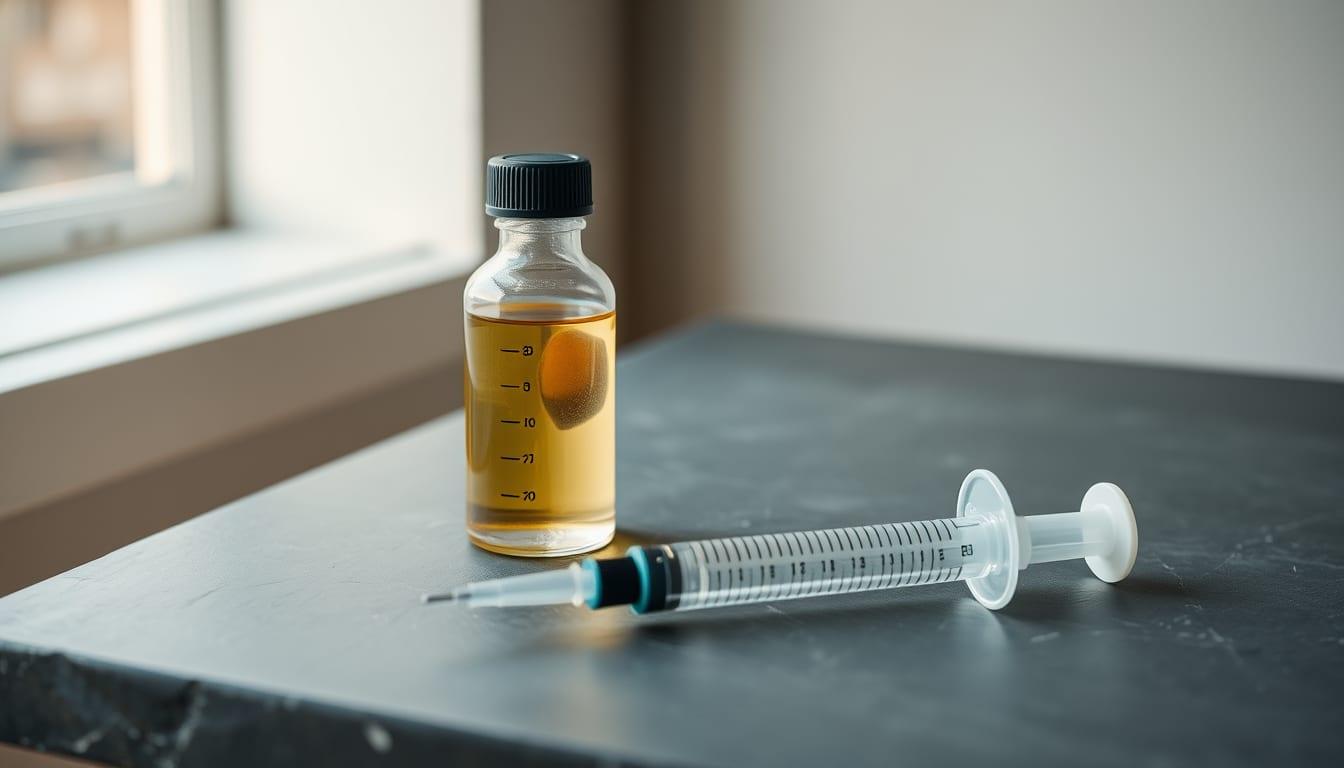
hCG, or human chorionic gonadotropin, is a hormone that acts like the body's luteinizing hormone (LH), the signal that tells the testes to make testosterone and the ovaries to release an egg. As a prescription injection, it is FDA-approved for selected men with hypogonadotropic hypogonadism, for some boys with undescended testes, and for ovulation induction in women with certain kinds of infertility.
This guide explains how hCG works, its approved uses and the common off-label use alongside testosterone, how it is given, its side effects and cautions, why the label states it is not effective for weight loss, and why its regulatory status changed in 2020. A licensed provider decides whether it fits your care and sets any dose.
At a glance
- Also called
- Human chorionic gonadotropin, Chorionic gonadotropin
- Drug class
- Gonadotropin (biological product)
- Forms
- Intramuscular injection
- FDA status
- FDA-approved. Regulated as a biological product since March 23, 2020, so it is not eligible to be compounded under sections 503A or 503B.
- Prescription
- Prescription only
- Class: gonadotropin; an LH-like hormone
- Form: injection from a powder mixed with diluent
- FDA-approved for hypogonadotropic hypogonadism in males, prepubertal cryptorchidism and ovulation induction
- The label states it has not been shown to be effective for weight loss
- A licensed biological product since 2020, so compounded hCG is not permitted under 503A or 503B
How does hCG work?
In pregnancy, hCG is made by the placenta. Its structure is close enough to LH that it binds the same receptor. In men, that receptor sits on the Leydig cells of the testes, which respond by producing testosterone. In women, an hCG injection can stand in for the natural LH surge that triggers ovulation.
This matters for men because testosterone made inside the testes supports sperm production. When outside testosterone is given, the pituitary stops sending LH, testicular testosterone falls and sperm production often drops. Low-dose hCG replaces the LH signal directly. A 2005 study in healthy men whose LH had been suppressed with testosterone found low-dose hCG maintained testosterone levels inside the testes.
hCG mainly mimics LH, not FSH, the other pituitary hormone involved in sperm production. A 2025 review notes that hCG alone may not maintain sperm production long term without FSH support.
What is hCG prescribed for?
FDA-approved uses on the chorionic gonadotropin label are:
- Selected cases of hypogonadotropic hypogonadism in males, meaning low testosterone caused by a pituitary deficiency.
- Prepubertal cryptorchidism (undescended testes) not caused by an anatomical blockage, usually in boys between about 4 and 9.
- Ovulation induction in women whose lack of ovulation is not due to primary ovarian failure, after appropriate pretreatment with other fertility hormones.
A common off-label use is giving low-dose hCG alongside testosterone therapy to help preserve sperm production in men who may want children. In a 2013 retrospective review of 26 men on testosterone plus low-dose hCG, none became azoospermic during follow-up and semen parameters did not change. That is encouraging but small, uncontrolled evidence, and a 2025 review describes the overall evidence for this approach as insufficient to support it for men wanting fertility.
Of the treatments used to raise a man's own testosterone, hCG is the only one FDA-approved for hypogonadotropic hypogonadism; enclomiphene is not approved, and aromatase inhibitors such as anastrozole are used off-label.
Is hCG a weight-loss drug?
No. The FDA-approved label carries a prominent statement that hCG has not been demonstrated to be effective in treating obesity: there is no substantial evidence that it increases weight loss beyond what calorie restriction alone produces, that it improves fat distribution, or that it reduces the hunger of a calorie-restricted diet. A 1995 meta-analysis of controlled trials of the so-called hCG diet reached the same conclusion.
Very-low-calorie hCG diets and over-the-counter hCG drops still circulate online. Products sold without a prescription are not approved, and the weight change on such plans comes from the severe calorie cut. If weight is your goal, see our weight management care instead.
How is hCG given?
hCG comes as a powder that is mixed with a sterile liquid just before use, then given by injection. The approved labeling describes intramuscular use. The schedule depends heavily on the reason for treatment, age and response; the label itself lists several regimens chosen by the physician. Your provider will set the dose and timing, show you how to mix and inject it, and explain storage once it has been mixed.
Men using it for hypogonadism or alongside testosterone are typically monitored with testosterone and estradiol levels and, when fertility is the goal, semen analysis.
What are the side effects of hCG?
Side effects listed on the label include headache, irritability, restlessness, depression, fatigue, fluid retention (edema), breast enlargement (gynecomastia) and pain at the injection site. In boys treated for cryptorchidism, hCG can trigger early puberty, and treatment should stop if signs appear.
When used with other fertility hormones in women, the principal serious reactions are ovarian hyperstimulation syndrome, rupture of ovarian cysts, multiple pregnancy and arterial blood clots. Allergic reactions, including anaphylaxis, have been reported with urine-derived hCG products.
Who should not use hCG?
The label lists these contraindications:
- Precocious (early) puberty.
- Prostate cancer or another androgen-dependent tumor.
- A previous allergic reaction to hCG.
Because the testosterone it stimulates can cause fluid retention, the label advises caution in people with heart or kidney disease, epilepsy, migraine or asthma. hCG can also interfere with some laboratory tests for gonadotropins such as LH. Tell your provider about all your medications, including other hormone treatments.
Why can't hCG be compounded anymore?
On March 23, 2020, a provision of the Biologics Price Competition and Innovation Act took effect: protein products that had been approved as drugs, including chorionic gonadotropin, were deemed to be licensed biological products. The FDA's notice to compounders explains that from that date these transitioned biological products are not eligible for the compounding exemptions in sections 503A and 503B of the Food, Drug, and Cosmetic Act, and chorionic gonadotropin appears on the FDA's list of products that transitioned.
In practice, that means hCG should come from an FDA-approved, licensed product dispensed by a pharmacy, not from a compounded vial. The FDA allows only limited mixing, diluting or repackaging of biological products under separate guidance. If you are offered compounded hCG, ask what product it is made from. More broadly, compounded medications are not FDA-approved; our compounding explainer covers how that system works.
How much does hCG cost?
Because it must come from a licensed product, hCG is typically more expensive than compounded medications, and a 2025 review notes its injectable form can be costly. Insurance may cover it for an approved diagnosis such as hypogonadotropic hypogonadism or infertility treatment, often with prior authorization; coverage for off-label use alongside testosterone is less common. Also budget for the labs and, if fertility is the goal, semen analyses that guide treatment.
Talk with a provider
Fertility-aware hormone care
We do not offer an hCG plan. If you have low testosterone and fertility matters to you, our hormone care starts with labs and a licensed provider who can explain your options, and refer you to a fertility specialist when that is the better route.
A licensed provider decides whether any medication is appropriate for you. Not everyone who has a consultation is prescribed medication.
Frequently asked questions
What is hCG used for in men?
hCG is FDA-approved for selected men with hypogonadotropic hypogonadism, where the pituitary does not signal the testes. It is also used off-label alongside testosterone therapy to help maintain testicular testosterone and sperm production.
Does hCG help with weight loss?
No. The FDA-approved label states that hCG has not been shown to be effective for treating obesity and does not increase weight loss beyond calorie restriction. Controlled trials reviewed in a 1995 meta-analysis reached the same conclusion.
Can hCG be compounded?
Not under the usual compounding rules. Since March 23, 2020, hCG has been regulated as a licensed biological product, and the FDA says such products are not eligible for the compounding exemptions in sections 503A and 503B.
Does hCG preserve fertility on TRT?
Small studies suggest low-dose hCG alongside testosterone can maintain testicular testosterone and semen parameters, but the evidence is limited and a 2025 review calls it insufficient. Men who want to conceive soon should discuss options with a provider, often including a fertility specialist.
How is hCG different from enclomiphene?
hCG acts directly on the testes in place of LH and is FDA-approved for hypogonadotropic hypogonadism. Enclomiphene is an oral pill that makes the pituitary release more LH and FSH, and it is not FDA-approved.
What are the side effects of hCG?
Label-listed side effects include headache, irritability, restlessness, depression, fatigue, fluid retention, breast enlargement and injection-site pain. In women undergoing fertility treatment, ovarian hyperstimulation and multiple pregnancy are the main serious risks.
Is hCG the same as LH?
No, but it is similar enough to activate the same receptor. That is why it can be used as a stand-in for LH's signal to the testes and ovaries.
Sources
- Chorionic gonadotropin for injection: prescribing information (DailyMed). Link (opens in a new tab)
- US Food and Drug Administration. Notice to compounders: changes that affect compounding as of March 23, 2020. Link (opens in a new tab)
- US Food and Drug Administration. List of approved NDAs for biological products that were deemed to be BLAs on March 23, 2020. Link (opens in a new tab)
- Coviello AD, Matsumoto AM, Bremner WJ, et al. Low-dose human chorionic gonadotropin maintains intratesticular testosterone in normal men with testosterone-induced gonadotropin suppression. J Clin Endocrinol Metab. 2005;90(5):2595–2602. Link (opens in a new tab)
- Hsieh TC, Pastuszak AW, Hwang K, et al. Concomitant intramuscular human chorionic gonadotropin preserves spermatogenesis in men undergoing testosterone replacement therapy. J Urol. 2013;189(2):647–650. Link (opens in a new tab)
- Hochu G, Geyer-Kim I, Kim E. Preserving spermatogenesis in testosterone deficiency: innovations in replacement and stimulatory therapies. Transl Androl Urol. 2025;14:3975–3987 (full text). Link (opens in a new tab)
- Lijesen GK, Theeuwen I, Assendelft WJ, et al. The effect of human chorionic gonadotropin (HCG) in the treatment of obesity by means of the Simeons therapy: a criteria-based meta-analysis. Br J Clin Pharmacol. 1995;40(3):237–243. Link (opens in a new tab)
For education only. This guide is for general education and is not medical advice. It does not replace the prescribing information for your medication or a conversation with a licensed provider, and it does not cover every use, precaution, interaction or side effect. Only a licensed provider can decide whether a medication is appropriate for you and at what dose. If you think you are having a serious reaction or an emergency, call 911.