How to Inject a GLP-1: Sites, Technique and Safety
Key takeaways
- Injectable GLP-1 medications go just under the skin (subcutaneously) in the abdomen, the front of the thigh or the back of the upper arm.
- Rotate sites every week and keep each injection at least an inch or two away from the last one to reduce lumps and irritation.
- Pens and vials are handled differently. Your prescriber and pharmacist set the amount and teach you the technique for the product you actually have.
- Never reuse or share needles. Used sharps go straight into an FDA-cleared sharps container or a sturdy household substitute.
- If you miss a dose or are unsure what you injected, check your label and call your provider instead of doubling up.
A GLP-1 injection is a small shot given just under the skin, usually once a week, into the fatty layer of the abdomen, thigh or upper arm. The technique is simple once you have been shown it, and most people find the needle smaller and less uncomfortable than they expected. What matters most is consistency: clean hands, a fresh needle, a rotated site and the exact amount your prescriber ordered.
This guide covers the parts of injecting that are the same for everyone: where the medication goes, how to rotate, how pens and vials differ, how to store and dispose of supplies, and the mistakes worth avoiding. It deliberately does not cover how much to inject. That amount is set by your prescriber and printed on your pharmacy label, and it is the one thing you should never work out on your own. For background on the medications themselves, see our guides to semaglutide and tirzepatide.
Where do GLP-1 injections go?
GLP-1 injections go into subcutaneous fat, the soft layer between the skin and the muscle, at one of three areas named in the FDA prescribing information: the abdomen, the front of the thigh and the back of the upper arm. The medication is absorbed from that fat layer into the bloodstream over time, so it does not need to reach a vein or a muscle.
- Abdomen. The most common choice because it is easy to see and reach. Stay about two inches away from the belly button, and avoid scars, stretch marks and the waistband line where clothing rubs.
- Front of the thigh. The upper outer area, roughly a hand's width below the hip and above the knee. Good for people who prefer not to use the stomach.
- Back of the upper arm. The fleshy area between shoulder and elbow. It is hard to pinch and reach on your own, so many people use it only when someone else is helping.
The prescribing information for the approved products states that you can change the time of day and the injection site without changing the dose. Avoid skin that is bruised, tender, red, hard, scarred or tattooed, because absorption can be less predictable there.
Why does rotating injection sites matter?
Rotating sites matters because repeated injections into the same spot can cause small lumps of hardened or thickened fat under the skin, called lipohypertrophy, and medication may be absorbed less evenly from that tissue. Rotation also gives minor irritation time to settle between shots.
A simple system works best. Some people move clockwise around the abdomen in four quadrants; others alternate between left thigh, right thigh, left abdomen and right abdomen week to week. Whatever pattern you choose, keep each new injection an inch or two away from the last one, and note the site in your phone or a calendar so you do not have to remember it.
How does a subcutaneous injection work, step by step?
A subcutaneous injection follows the same basic sequence whether you use a pen or a syringe, and your pharmacist or provider should walk you through it with your own product before your first dose. The general steps below are the ones described in patient education from the National Library of Medicine; the instructions that come with your medication always take priority.
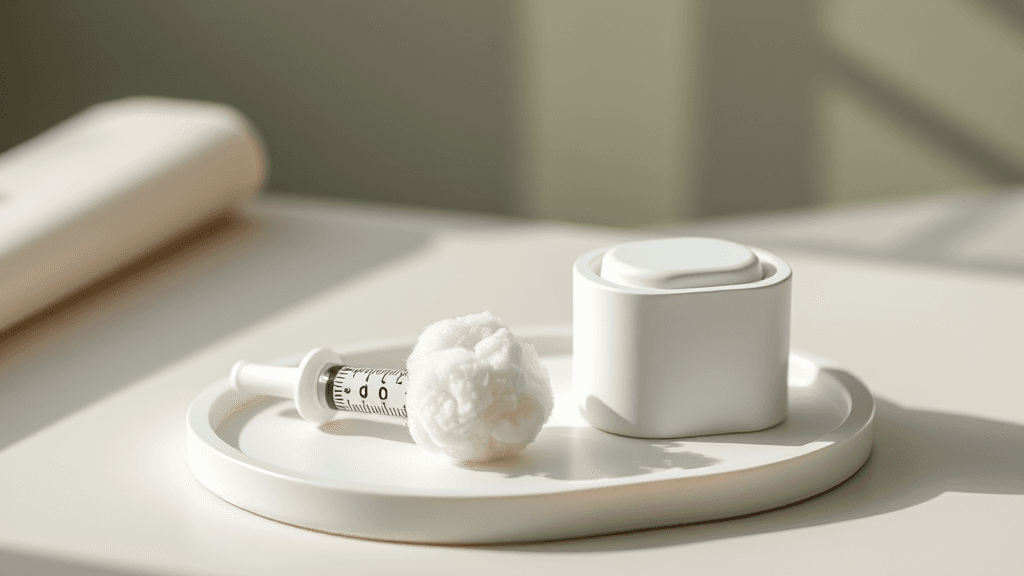
- Prepare. Wash your hands with soap and water, and gather your medication, a new needle or syringe, an alcohol swab and your sharps container on a clean surface.
- Check the medication. Confirm it is the right product, it is within its date, and it looks the way the label says it should. Do not use it if it is cloudy, discolored or has particles when it should be clear, or if it has been frozen.
- Clean the site. Wipe the skin with an alcohol swab and let it air-dry so the injection stings less.
- Inject. Gently pinch up the skin if you were taught to, insert the needle at the angle you were shown, and deliver the medication slowly and fully.
- Finish. Release the skin, withdraw the needle, and press lightly with a cotton ball or gauze if there is a drop of blood. Do not rub the site.
- Dispose. Put the needle or syringe straight into your sharps container. Never recap a used needle unless you have been specifically taught a one-handed method.
How are pens and vials different?
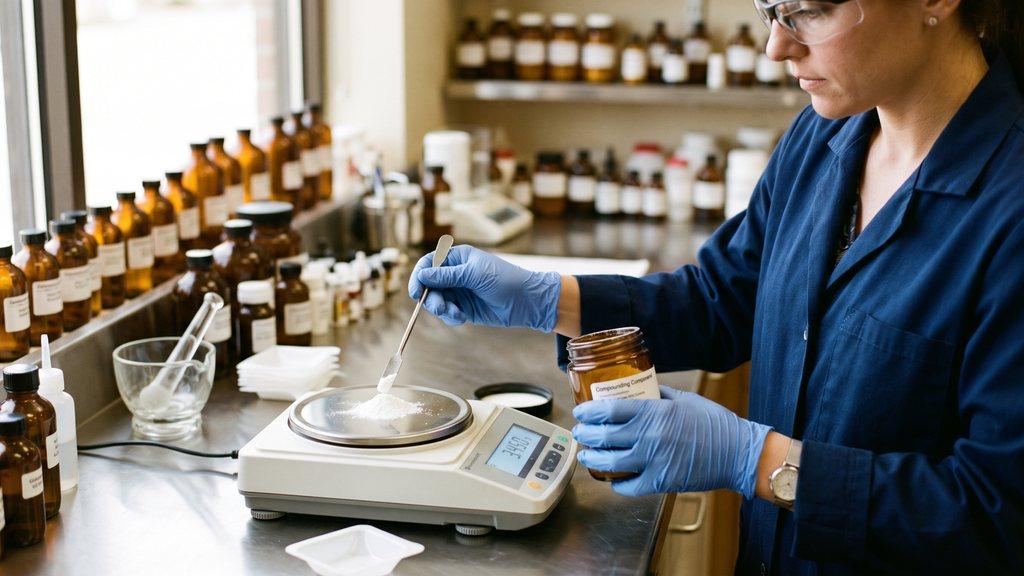
Pens and vials differ mainly in who does the measuring. An FDA-approved single-dose pen comes pre-filled with one fixed dose, so you attach nothing (or a pen needle, depending on the device), press it to the skin and let the device deliver what the manufacturer filled. A vial, which is how most compounded GLP-1 medications are supplied, requires you to draw the prescribed amount into a syringe yourself.
That extra step is where most errors happen. The FDA has reported receiving adverse event reports, some requiring hospitalization, linked to dosing errors with compounded injectable semaglutide, including patients measuring incorrect amounts and, in some cases, health care professionals miscalculating doses. The practical lesson is not that vials are unsafe; it is that the amount on your pharmacy label and the syringe you were given go together, and nothing should be converted, estimated or copied from a video or forum.
- Use only the syringes your pharmacy or provider supplied for that vial. Syringe markings vary, and a mismatch is a common source of error.
- If the label, the syringe and your instructions do not obviously line up, stop and call the pharmacy before injecting.
- Ask for a teach-back: show your provider or pharmacist how you draw up and inject, and let them correct you while it is new.
- Remember that compounded medications are not FDA-approved. FDA-approved versions exist and your provider can explain the trade-offs; see our explainer on compounded GLP-1s in 2026.
What are the most common injection mistakes?
The most common injection mistakes are small, fixable habits rather than dramatic errors. Most of them come down to rushing, reusing supplies or improvising when something looks unfamiliar.
- Reusing needles. Needles dull after one use, which makes injections hurt more and raises the risk of infection. Use a new one every time and never share pens, needles or syringes, even with family.
- Injecting cold medication straight from the fridge. Many people find a cold injection stings more. Product instructions often allow letting it sit at room temperature briefly first; follow what your label says.
- Injecting through clothing or into irritated skin. Always use clean, bare, healthy skin.
- Using the same spot every week. See the rotation section above.
- Guessing after a problem. If medication leaked, the pen jammed or you are not sure the full amount went in, do not repeat the injection on your own. Call your provider or pharmacist.
What should you do if you miss a dose?
If you miss a weekly GLP-1 dose, check your medication's instructions and contact your provider rather than doubling up. The FDA-approved labels each give a specific window for taking a late dose and a point after which you skip it and wait for your next scheduled day, and the windows are not the same for every product. Compounded medications follow the instructions your prescriber and pharmacy give you.
Missing more than one dose in a row is a different situation. After a gap of a few weeks, restarting at your previous level can bring back stronger nausea and vomiting, so prescribers often restart lower. That is a decision for your provider to make, not a reason to stop treatment quietly. If side effects are what led you to skip doses, say so; our guide to GLP-1 side effects covers what can help.
How do you dispose of needles safely?
Used needles and syringes go straight into an FDA-cleared sharps disposal container, or, if you do not have one, a heavy-duty plastic household container with a tight, puncture-resistant lid, such as an empty laundry detergent bottle. The FDA advises never throwing loose needles in the trash or recycling and never flushing them.
When the container is about three-quarters full, close it and follow your community's disposal rules, which vary by state and city. Options include drop-off sites at pharmacies, hospitals or health departments, household hazardous waste sites, and mail-back programs. If you travel with medication, the same rules apply on the road; our guide to storing and traveling with GLP-1s covers packing sharps and keeping medication at the right temperature.
When should you call your provider about an injection?
Call your provider about an injection if the site becomes increasingly red, hot, swollen or painful over a day or two, if a lump persists for more than a couple of weeks, or if you think you injected the wrong amount. Mild redness, itching or a small bruise that fades in a day or two is common and usually not a concern.
Seek urgent care for signs of a serious allergic reaction, such as swelling of the face, lips, tongue or throat, trouble breathing or swallowing, a rapid heartbeat, or a widespread rash. Severe stomach pain that does not go away, with or without vomiting, also needs prompt medical attention. On a supervised program like our compounded GLP-1 program, your provider is the right first call for any technique question, and a licensed provider decides whether a medication and form are appropriate for you in the first place.
Common questions
Does a GLP-1 injection hurt?
Most people describe a brief pinch or sting rather than real pain, because the needles used for subcutaneous injections are short and very fine. Letting the alcohol dry before injecting, using a new needle every time and rotating sites all help. If injections are consistently painful, ask your pharmacist to watch your technique.
Is the stomach or the thigh a better injection site?
Both are listed in the FDA prescribing information, and the labels say the site can be changed without changing the dose. Many people prefer the abdomen because it is easy to see and pinch. The best site is one you can reach comfortably, keep clean and rotate consistently.
Can I inject at a different time of day each week?
The approved labels allow the time of day to change, as long as you keep to the weekly schedule. If you need to move your injection day, ask your provider how; the labels set a minimum gap between doses. Picking a regular day you will remember, with a phone reminder, prevents most missed doses.
What if I see a drop of medication or blood after injecting?
A small drop of blood is normal; press lightly with gauze and do not rub. A visible drop of medication at the skin can mean the needle was withdrawn too quickly. Do not inject again to make up for it. Note it and mention it to your provider or pharmacist, who can review your technique.
Can someone else give me the injection?
Yes. A partner, family member or caregiver can give the injection once they have been shown how, which is especially useful for the back of the upper arm. They should follow the same hand-washing, site-cleaning and sharps disposal steps and should never reuse or share the needle.
Do I need to store syringes or pen needles in the fridge?
No. Only the medication has temperature requirements. Keep unused needles and syringes sealed in their packaging in a clean, dry place at room temperature and out of reach of children and pets.
Sources
- Semaglutide injection 2.4 mg and semaglutide tablets for weight management: prescribing information (DailyMed). Link (opens in a new tab)
- Tirzepatide injection for weight management and obstructive sleep apnea: prescribing information (DailyMed). Link (opens in a new tab)
- MedlinePlus Medical Encyclopedia (National Library of Medicine). Subcutaneous (SQ) injections. Link (opens in a new tab)
- MedlinePlus (National Library of Medicine). Semaglutide injection. Link (opens in a new tab)
- US Food and Drug Administration. FDA's concerns with unapproved GLP-1 drugs used for weight loss. Link (opens in a new tab)
- US Food and Drug Administration. Best way to get rid of used needles and other sharps. Link (opens in a new tab)
This article is for general education and is not medical advice. Protocols described here require an online consultation with a licensed provider who will determine if a prescription is appropriate for you. Explore weight & metabolic options or read the FAQ.