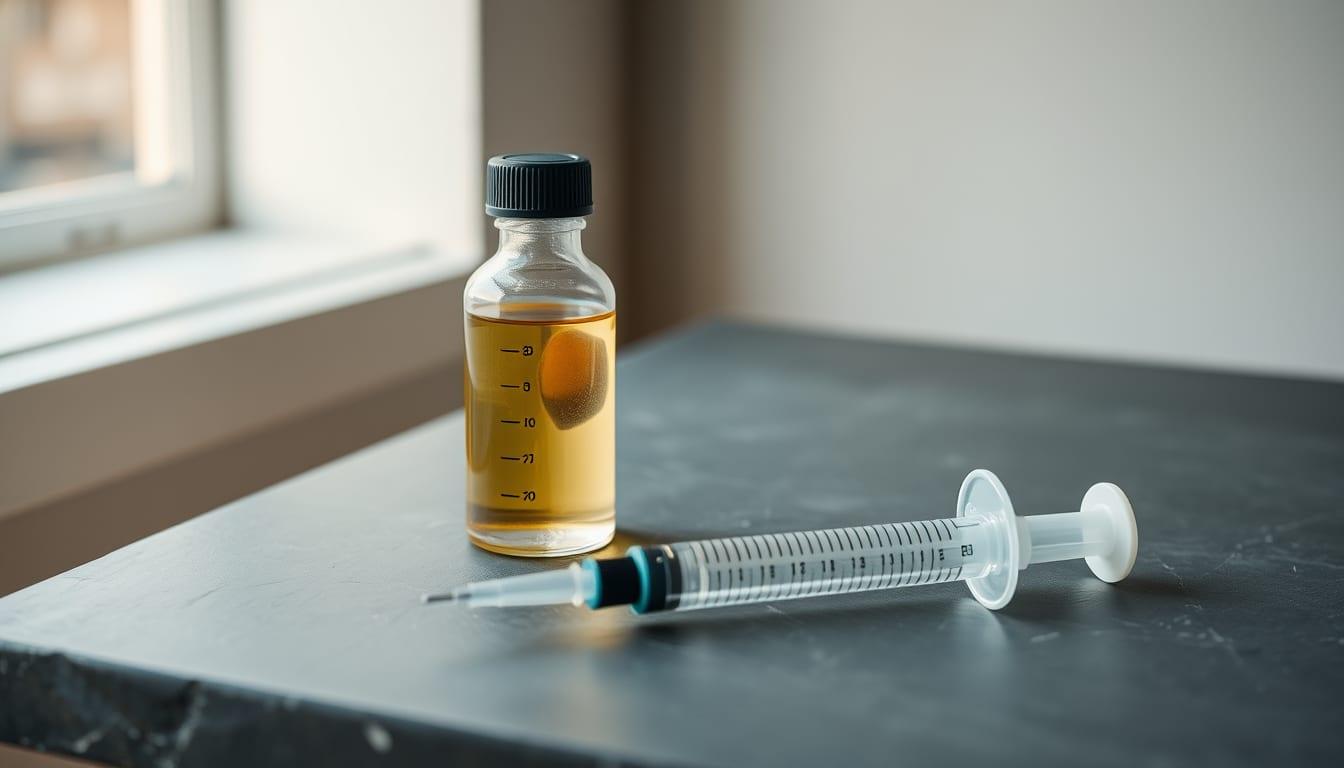
Topical testosterone is testosterone in a gel or solution that a man applies to his skin each day, where it is absorbed into the bloodstream. It is FDA-approved to replace testosterone in men with hypogonadism caused by identifiable problems with the testes, pituitary or hypothalamus. Like all testosterone, it is a Schedule III controlled substance.
What sets skin-applied testosterone apart is a boxed warning about secondary exposure: testosterone left on the skin can rub off onto children and women, and children have developed signs of early puberty this way. This guide covers how topical testosterone works, how it differs from injections, the transfer precautions, side effects and monitoring, and who should not use it. A licensed provider decides whether it is appropriate and sets the dose.
At a glance
- Also called
- Testosterone gel, Testosterone topical solution, Transdermal testosterone
- Drug class
- Androgen (testosterone)
- Forms
- Topical gel (pump or packet) · Topical solution
- FDA status
- FDA-approved for men with hypogonadism caused by specific testicular, pituitary or hypothalamic conditions. Schedule III controlled substance.
- Prescription
- Prescription only
- Forms: alcohol-based gel (pump or packet) or solution, applied daily to the skin
- FDA-approved for primary or hypogonadotropic hypogonadism; not established for age-related low testosterone
- Boxed warning: virilization of children from contact with treated skin
- Can raise blood pressure, red cell counts and PSA; suppresses sperm production
- Flammable until dry; wash hands after applying and cover the area with clothing
How does topical testosterone work?
The testes make testosterone in response to luteinizing hormone (LH) from the pituitary. When that system fails, testosterone falls. Topical testosterone supplies the hormone from outside: the gel or solution dries on the skin, and testosterone passes through the skin into the blood over the following hours. Because it is applied every day, it tends to give steadier levels than injections spaced days or weeks apart.
As with every form of testosterone, the brain senses the added hormone and turns down LH and follicle-stimulating hormone (FSH). The prescribing information warns that this feedback can suppress sperm production, and that androgens may lead to azoospermia (no sperm in the semen). For how the forms compare overall, see oral vs. injectable testosterone, which also covers gels.
What is topical testosterone prescribed for?
Topical testosterone is FDA-approved as replacement therapy in adult men with low or absent testosterone due to:
- Primary hypogonadism, where the testes fail, for example from undescended testes, torsion, orchitis, Klinefelter syndrome, chemotherapy or surgical removal.
- Hypogonadotropic hypogonadism, where the pituitary or hypothalamus does not send the signal, for example from a tumor, injury, radiation or a genetic condition.
The label states that safety and effectiveness have not been established in men with age-related (late-onset) hypogonadism or in males under 18. It also notes that topical products differ in strength and application instructions, so one cannot be swapped for another without a new prescription. Use in women is not FDA-approved and is off-label; testosterone for women covers that separate question.
Guidelines from the Endocrine Society call for diagnosing hypogonadism only in men with symptoms and consistently low morning testosterone, confirmed on repeat testing. Our low testosterone guide and the low T symptom check explain the workup.
How is topical testosterone applied?
Gels come in metered pumps or single-use packets; solutions come with an applicator. Each product has its own approved application sites, such as the shoulders and upper arms, and some products specifically prohibit others, such as the genitals or abdomen. Follow the instructions for your product exactly. MedlinePlus notes topical testosterone is usually applied once a day in the morning, after a shower or bath, but your prescriber sets the dose and adjusts it from follow-up blood levels.
The practical rules are what make skin-applied testosterone different:
- Wash your hands with soap and water right after applying.
- Let it dry, then cover the area with clothing such as a T-shirt.
- Wash the site before any skin-to-skin contact you expect with another person.
- Avoid fire, flame and smoking until it dries; the alcohol base is flammable.
- Timing of showers and swims matters, because washing too soon removes some of the dose; your product's label says how long to wait.
Never share it, and store it where children cannot reach it.
What is the boxed warning on testosterone gel?
Topical testosterone carries a boxed warning for secondary exposure. Virilization has been reported in children who were exposed to testosterone through contact with a man's unwashed or uncovered application site. According to the label, signs have included enlargement of the penis or clitoris, pubic hair, increased erections and libido, aggressive behavior and advanced bone age. In most cases these regressed once the exposure stopped, but in a few cases enlarged genitals did not fully return to normal size and bone age stayed modestly advanced. In some cases, not following the precautions increased the risk.
Transfer is measurable. In a label study, women who rubbed a man's uncovered application site two hours after he applied the gel had their average testosterone rise by about 280%. When the site was covered by a T-shirt, the rise was about 6%. Women who are exposed can develop acne or new hair growth, and testosterone can harm a developing female fetus, so a pregnant partner must avoid contact.
Call a doctor right away if a child shows any of those signs, or if a woman in close contact develops new hair growth or acne.
What are the side effects of topical testosterone?
In one gel's main trial, the most common adverse reaction was an increase in PSA, reported in 11.1% of men during the double-blind period. Application-site reactions were uncommon in that trial (under 2%). MedlinePlus lists acne, headache, dry or itchy skin and skin redness among side effects. Warnings shared with other testosterone products include:
- Blood pressure increases. In ambulatory monitoring, one gel raised average blood pressure by 1.9/1.3 mm Hg after 16 weeks, and by 3.0/2.2 mm Hg in men already on blood pressure medicine. It is not recommended with uncontrolled hypertension.
- Higher red blood cell counts (hematocrit), which can raise the risk of clots; hematocrit is checked before and during treatment.
- Blood clots: deep vein thrombosis and pulmonary embolism have been reported. Leg pain or swelling, or sudden shortness of breath, need urgent care.
- Prostate effects: worsening urinary symptoms of an enlarged prostate and a possible increased risk of prostate cancer, so PSA is monitored.
- Sleep apnea may worsen, especially with obesity or lung disease; edema, breast enlargement and lipid changes can also occur.
- Lower sperm production, which can make conception harder.
On heart risk, the TRAVERSE trial, which used a daily testosterone gel in 5,246 men aged 45 to 80 at high cardiovascular risk, found major cardiovascular events in 7.0% on testosterone versus 7.3% on placebo. After it, the FDA removed boxed-warning language about cardiovascular outcomes from testosterone labels while adding the blood-pressure warning. The secondary-exposure boxed warning on gels remains. The testosterone cypionate guide covers monitoring that applies to all forms.
Who should not use topical testosterone?
The label lists these contraindications and cautions:
- Men with breast cancer or known or suspected prostate cancer.
- Women who are pregnant; testosterone can masculinize a female fetus.
- Men with uncontrolled high blood pressure, a high hematocrit, untreated severe sleep apnea, or heart, kidney or liver disease prone to fluid retention need careful evaluation first.
- Men planning to father a child soon; see TRT and fertility and the enclomiphene guide for approaches that protect sperm production.
- Households with young children or a pregnant partner, where strict transfer precautions may be hard to keep; that is worth raising when choosing a form.
Interactions: androgens can lower blood sugar and insulin needs in people with diabetes, can change the effect of blood thinners (so INR is checked more often), and can add to fluid retention with corticosteroids. Tell your provider about every medicine and supplement you use.
Other non-injectable forms, and compounded creams
Besides gels and solutions, FDA-approved testosterone comes as a skin patch, a nasal gel, a buccal system placed against the gum, oral capsules and implanted pellets, each with its own label and precautions. Some pharmacies also compound testosterone creams. Compounded medications are not FDA-approved; their absorption and transfer risk have not been studied the way approved products have, and the same exposure precautions should be assumed.
How much does topical testosterone cost?
Generic gels and solutions are available from several manufacturers, but daily topical products often cost more than generic injections. Insurance may cover them with documented low testosterone and may require prior authorization. As with any testosterone, the ongoing costs include follow-up visits and labs such as testosterone, hematocrit and PSA.
Talk with a provider
Testosterone care through American Protocol
We do not offer a testosterone gel plan. Our men's hormone care starts with a baseline lab panel and a licensed provider who confirms whether testosterone is truly low, explains the options, and decides whether any treatment, and which form, is appropriate.
A licensed provider decides whether any medication is appropriate for you. Not everyone who has a consultation is prescribed medication.
Frequently asked questions
Can testosterone gel affect my partner or children?
Yes. Testosterone on the skin can transfer through contact. Children exposed this way have shown signs of early puberty, and women can develop acne or new hair growth. Wash your hands, cover the site once dry, and wash it before skin-to-skin contact.
What is the boxed warning on testosterone gel?
It warns that children have developed virilization after contact with a man's unwashed or uncovered application site, and that children should avoid contact with those areas.
Is testosterone gel better than injections?
Neither is better for everyone. Gels give steadier daily levels and avoid needles but carry transfer risk and often cost more. Injections are less expensive but produce peaks and troughs. A provider helps you weigh them.
Does testosterone gel raise blood pressure?
It can. In monitoring studies, one gel raised average blood pressure by about 2/1 mm Hg overall and more in men already treated for hypertension. Blood pressure should be checked periodically.
Does testosterone gel affect fertility?
Yes. Like all testosterone, it suppresses the signals that drive sperm production and can cause very low or absent sperm counts. Men who want children soon should discuss alternatives first.
Is testosterone gel flammable?
Yes, until it dries. The alcohol base is flammable, so avoid fire, flame and smoking until the gel has dried completely.
Can women use testosterone gel?
It is not FDA-approved for women, and it must not be used in pregnancy. Some providers prescribe testosterone off-label to women at much lower doses; that is a separate decision.
Is topical testosterone a controlled substance?
Yes. All testosterone products are Schedule III controlled substances and require a prescription and monitoring.
Sources
- Testosterone gel: prescribing information, updated 2025 (DailyMed). Link (opens in a new tab)
- Testosterone gel (alternate strength): prescribing information (DailyMed). Link (opens in a new tab)
- MedlinePlus (National Library of Medicine). Testosterone topical. Link (opens in a new tab)
- US Food and Drug Administration. FDA issues class-wide labeling changes for testosterone products (2025). Link (opens in a new tab)
- Bhasin S, Brito JP, Cunningham GR, et al. Testosterone therapy in men with hypogonadism: an Endocrine Society clinical practice guideline. J Clin Endocrinol Metab. 2018;103(5):1715–1744. Link (opens in a new tab)
- Lincoff AM, Bhasin S, Flevaris P, et al. Cardiovascular safety of testosterone-replacement therapy. N Engl J Med. 2023;389(2):107–117. Link (opens in a new tab)
- Cavender RK, Fairall M. Precocious puberty secondary to topical testosterone transfer: a case report. J Sex Med. 2011;8(2):622–626. Link (opens in a new tab)
For education only. This guide is for general education and is not medical advice. It does not replace the prescribing information for your medication or a conversation with a licensed provider, and it does not cover every use, precaution, interaction or side effect. Only a licensed provider can decide whether a medication is appropriate for you and at what dose. If you think you are having a serious reaction or an emergency, call 911.