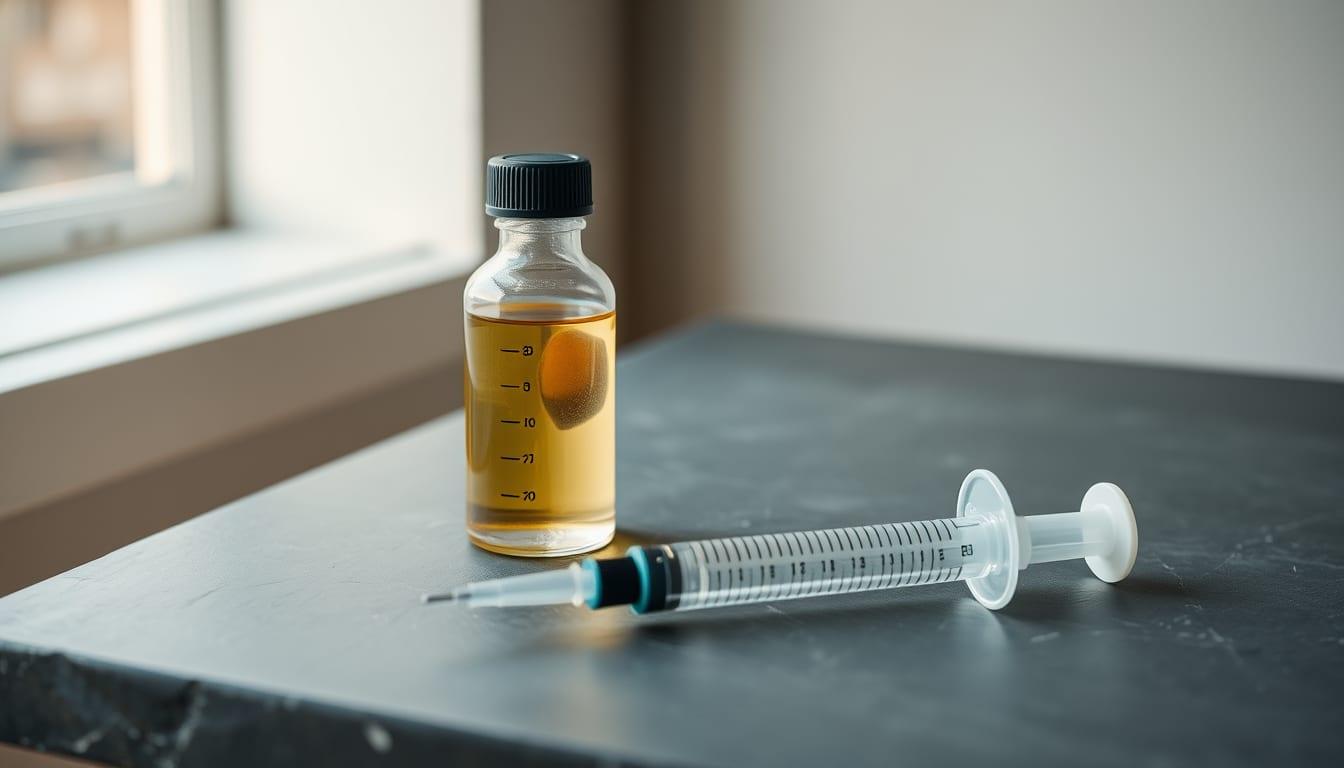
Tadalafil is a prescription tablet used to treat erectile dysfunction (ED) and the urinary symptoms of an enlarged prostate. Like sildenafil, it is a PDE5 inhibitor that improves blood flow to the penis during arousal, but it stays active much longer: the FDA label shows improved erections for up to 36 hours after an as-needed dose, and it can also be prescribed as a low daily tablet.
This guide explains how tadalafil works, its FDA-approved uses, the difference between as-needed and daily use, side effects (including the back pain that sets it apart), and the medications it must not be combined with. Your prescriber decides whether it fits you and which pattern and strength to use.
At a glance
- Drug class
- Phosphodiesterase type 5 (PDE5) inhibitor
- Forms
- Oral tablet · Oral suspension (pulmonary hypertension product)
- FDA status
- FDA-approved, available as brand-name and generic tablets. Compounded combinations are not FDA-approved.
- Prescription
- Prescription only
- Class: PDE5 inhibitor
- Form: tablet you swallow, as needed before sex or once daily
- FDA-approved for ED, enlarged-prostate (BPH) symptoms, and both together; a separate product treats pulmonary arterial hypertension
- Half-life of about 17.5 hours; food does not change how it is taken
- Never combine with nitrates (such as nitroglycerin) or riociguat
How does tadalafil work?
Sexual arousal makes nerves in the penis release nitric oxide, which raises a messenger molecule called cGMP. cGMP relaxes the smooth muscle of the erectile tissue so blood can flow in. The enzyme PDE5 breaks cGMP down. Tadalafil blocks PDE5, so the arousal signal produces a stronger and longer-lasting response. Without sexual stimulation, it does nothing on its own, and it does not increase desire.
What makes tadalafil different is time. Its average half-life in healthy men is about 17.5 hours, roughly four times that of sildenafil. In practice that means a single dose covers a long window, and a small daily dose keeps a steady level in the body so timing stops mattering.
PDE5 is also found in the prostate, the bladder neck and blood vessel walls. Relaxing smooth muscle there is why tadalafil helps with urinary symptoms from an enlarged prostate, and why it lowers blood pressure slightly.
What is tadalafil prescribed for?
The tadalafil tablets used for men's health are FDA-approved for three uses:
- Erectile dysfunction, either as needed before sex or on a once-daily schedule.
- Signs and symptoms of benign prostatic hyperplasia (BPH): a weak stream, hesitancy, frequent or urgent urination and getting up at night to urinate, taken once daily. When it is started together with finasteride for BPH, the label limits the combined start to up to 26 weeks.
- ED and BPH together, with one daily tablet.
A separate tadalafil product, sold at a different strength, is FDA-approved to improve exercise ability in pulmonary arterial hypertension (PAH). PAH is managed by specialists, and it is not something we treat.
Anything outside these labels is off-label, meaning a prescriber may use it but the FDA did not review that use. Because tadalafil lowers blood pressure and can be combined with prostate medications, BPH symptoms should be evaluated by a clinician before treatment; urinary symptoms can have other causes, and the label notes that prostate cancer can coexist with BPH.
How is tadalafil taken: as needed or daily?
Tadalafil is a tablet you swallow, with or without food. There are two patterns, and your prescriber chooses between them and sets the strength:
- As needed. One tablet before sex, no more than once a day. The label shows improvement in erections compared with placebo for up to 36 hours after a dose, which is why many men like it for weekends or unplanned intimacy.
- Once daily. A lower-strength tablet at about the same time every day, regardless of when you have sex. This is the pattern used for BPH symptoms and for men with ED who want to stop planning around a pill.
Doses are lowered or spaced out for men with reduced kidney or liver function and for men taking medicines that raise tadalafil levels. Daily use is not recommended for men with severe kidney impairment. Do not double up, switch patterns or combine tadalafil with another ED medication on your own. If the effect is not what you hoped, your provider can review timing, strength and other contributing factors. Our sildenafil vs. tadalafil article explains how the two patterns fit different routines.
What are the side effects of tadalafil?
In the FDA label's as-needed ED trials, headache was reported by 11% to 15% of men depending on strength, compared with 5% on placebo; indigestion by 4% to 10% (1% on placebo); and back pain by 3% to 6% (3%). Muscle aches, nasal congestion, flushing and pain in the limbs were each reported by up to about 4%.
Back pain and muscle aches are more typical of tadalafil than of other PDE5 inhibitors. In the label's pharmacology studies they generally started 12 to 24 hours after a dose and usually settled within 48 hours, and were mostly mild or moderate.
Rare but serious effects need prompt care:
- An erection lasting more than 4 hours. Seek emergency treatment to protect the erectile tissue.
- Sudden vision loss in one or both eyes, which can signal NAION, a loss of blood flow to the optic nerve.
- Sudden decrease or loss of hearing, sometimes with ringing in the ears and dizziness.
- Chest pain during sex, fainting or a severe drop in blood pressure. If you need emergency care for chest pain, tell the team you took tadalafil; the label says at least 48 hours should pass after the last dose before nitrates are considered.
- Allergic reactions, including serious skin reactions.
Who should not take tadalafil?
Before prescribing, your provider will check for:
- Any form of organic nitrate, such as nitroglycerin or isosorbide, and recreational nitrites (poppers). Contraindicated.
- Riociguat or other guanylate cyclase stimulators. Contraindicated.
- A past serious allergic reaction to tadalafil. Contraindicated.
- Heart conditions that make sexual activity unsafe, a heart attack in the last 90 days, a stroke in the last 6 months, unstable angina or angina during sex, recent heart failure, uncontrolled heart rhythm problems, or very low or uncontrolled high blood pressure.
- Alpha-blockers and other blood pressure medicines. The label advises caution with alpha-blockers for ED and does not recommend tadalafil with alpha-blockers for BPH.
- Strong CYP3A4 inhibitors or inducers, such as ritonavir, ketoconazole, itraconazole or rifampin, which raise or lower tadalafil levels.
- Heavy drinking. The label lists substantial alcohol (5 or more drinks) as a cause of low blood pressure, dizziness and headache with tadalafil.
- Kidney or liver disease, retinal conditions such as retinitis pigmentosa, a history of NAION, penile deformities, or conditions that raise priapism risk such as sickle cell anemia.
Because tadalafil lasts so long, its interactions last longer too. Give your provider a complete list of medicines and supplements, including anything for blood pressure, the prostate, HIV or fungal infections.
Generic, brand-name and compounded tadalafil
Generic tadalafil tablets are FDA-approved and must match the original brand's active ingredient, strength and absorption. Our Performance Plan uses commercially made tadalafil tablets, not a compounded formula.
You may also see tadalafil in compounded troches or chewables, sometimes mixed with sildenafil. Compounded medications are not FDA-approved. They are prepared by state-licensed pharmacies for individual prescriptions without FDA premarket review of their safety, effectiveness or quality, and combining two PDE5 inhibitors falls outside both FDA labels. If you are considering a compounded combination, ask your provider why it suits you better than an approved tablet. Our compounding explainer covers the basics.
How much does tadalafil cost?
Generic tadalafil tablets are widely available from many manufacturers, and cash prices vary a lot between pharmacies, strengths and quantities. Insurance may cover tadalafil for BPH more readily than for ED; many plans restrict or exclude ED medications, so check your formulary.
Daily use means more tablets per month than as-needed use, which can change the cost. With a telehealth plan, check what the monthly price includes: the consultation, the tablets, follow-up when something needs adjusting, and discreet shipping.
Available with a prescription
Tadalafil through American Protocol
Our Performance Plan provides tadalafil tablets, as needed or daily, with provider follow-up and plain-package shipping, if an independent licensed provider decides it is appropriate after reviewing your heart health and medications.
Performance Plan: $39 / monthly if prescribed · $49 provider consultation
Also offered in
A licensed provider decides whether any medication is appropriate for you. Not everyone who has a consultation is prescribed medication.
Frequently asked questions
How long does tadalafil last?
An as-needed dose of tadalafil can improve erections for up to 36 hours, according to the FDA label. Its half-life is about 17.5 hours, much longer than sildenafil's, which is why it is often chosen for a longer window.
When should I take tadalafil?
As-needed tadalafil is taken before anticipated sexual activity, with or without food, and no more than once a day; your provider will explain the timing for your prescription. With daily tadalafil, you take it at about the same time each day and timing around sex no longer applies.
What is the difference between daily and as-needed tadalafil?
As-needed tadalafil is a higher-strength tablet taken before sex, no more than once a day. Daily tadalafil is a lower strength taken every day at the same time, so you do not plan around a pill. Daily use is also the pattern approved for enlarged-prostate symptoms.
Why does tadalafil cause back pain?
The exact cause is not established. In the label's studies, back pain and muscle aches usually appeared 12 to 24 hours after a dose, were mild to moderate, and generally went away within 48 hours. Tell your provider if it is severe or keeps returning.
Can tadalafil help with an enlarged prostate?
Yes. Once-daily tadalafil is FDA-approved to treat the signs and symptoms of benign prostatic hyperplasia, such as a weak stream and frequent urination, alone or together with ED. Urinary symptoms should be evaluated first, because other conditions can cause them.
Is tadalafil better than sildenafil?
Neither is better overall. They work the same way; tadalafil lasts longer and can be taken daily, while sildenafil is shorter-acting. The right choice depends on your routine, side effects and health history. See the sildenafil guide for comparison.
Can I drink alcohol with tadalafil?
Light drinking is not prohibited, but the label warns that substantial alcohol (5 or more drinks) with tadalafil can cause low blood pressure, dizziness, a fast heart rate and headache. Keep alcohol modest.
Does tadalafil affect testosterone or desire?
Tadalafil does not raise testosterone or create sexual desire. It supports the blood-flow part of an erection. If low desire or fatigue are part of the picture, a hormone evaluation may help; try our low T symptom check.
Sources
- Tadalafil tablets: prescribing information (DailyMed). Link (opens in a new tab)
- MedlinePlus (National Library of Medicine). Tadalafil. Link (opens in a new tab)
- Burnett AL, Nehra A, Breau RH, et al. Erectile dysfunction: AUA guideline. J Urol. 2018;200(3):633–641. Link (opens in a new tab)
- National Institute of Diabetes and Digestive and Kidney Diseases (NIH). Treatment for erectile dysfunction. Link (opens in a new tab)
- National Institute of Diabetes and Digestive and Kidney Diseases (NIH). Prostate enlargement (benign prostatic hyperplasia). Link (opens in a new tab)
- US Food and Drug Administration. Compounding and the FDA: questions and answers. Link (opens in a new tab)
For education only. This guide is for general education and is not medical advice. It does not replace the prescribing information for your medication or a conversation with a licensed provider, and it does not cover every use, precaution, interaction or side effect. Only a licensed provider can decide whether a medication is appropriate for you and at what dose. If you think you are having a serious reaction or an emergency, call 911.