Key takeaways
- PCOS is diagnosed when two of three features are present: irregular or absent ovulation, high androgens (on labs or as symptoms), and polycystic ovaries, after other causes are excluded.
- The 2023 international guideline allows a blood test for anti-Mullerian hormone (AMH) in place of ultrasound for the ovary criterion, in adults only.
- Labs confirm high androgens and rule out look-alikes such as thyroid disease, high prolactin and nonclassic congenital adrenal hyperplasia.
- Insulin resistance is common in PCOS regardless of weight, so glucose and lipid screening is part of care.
- Treatment follows your goals: lifestyle, the combined pill, metformin, spironolactone and GLP-1 medicines for symptoms and metabolic health; letrozole when pregnancy is the goal.
Polycystic ovary syndrome (PCOS) is a common hormonal condition diagnosed when at least two of three features are present: irregular or absent ovulation, signs of excess androgens (male-pattern hormones) on blood tests or in symptoms such as acne and unwanted hair, and polycystic-appearing ovaries, once other conditions that look similar have been ruled out. It affects far more than the ovaries, with links to insulin resistance, heart and metabolic risk, mood and sleep.
This guide covers the current diagnostic criteria, including what changed in the 2023 international guideline, the symptoms, the lab tests that matter and why, how insulin resistance fits in, and how treatment is matched to what you want: symptom control, metabolic health, or pregnancy.
How is PCOS diagnosed?
Most clinicians use the Rotterdam criteria, set out in a 2003 consensus and published in 2004. A diagnosis needs two of the following three, with other causes excluded:
- Ovulatory dysfunction: irregular cycles, very long cycles, or no periods.
- Hyperandrogenism: high androgen levels on blood tests (biochemical), or clinical signs such as hirsutism (coarse hair on the face, chest or abdomen), acne or scalp hair thinning.
- Polycystic ovarian morphology: many small follicles or enlarged ovaries on ultrasound.
The 2023 International Evidence-based Guideline for the Assessment and Management of PCOS kept this framework but simplified the steps. Its most notable change is that a blood test for anti-Mullerian hormone (AMH) can now be used as an alternative to ultrasound for the ovary criterion, in adults only. In adolescents, ultrasound and AMH are not used, because many normal teenage ovaries look polycystic, and diagnosis rests on irregular cycles plus hyperandrogenism. If someone has both irregular cycles and hyperandrogenism, an ultrasound or AMH is not needed to diagnose PCOS.
You may also see the name polyendocrine metabolic ovary syndrome (PMOS), which MedlinePlus now lists as an alternative name to reflect that the condition is metabolic as well as reproductive.
What are the symptoms of PCOS?
PCOS looks different from person to person, which is part of why diagnosis is often delayed. Common features:
- Irregular, infrequent or absent periods, or unpredictable heavy bleeding.
- Hirsutism: dark, coarse hair on the upper lip, chin, chest, abdomen or back.
- Acne, particularly persistent or adult-onset acne along the jaw.
- Scalp hair thinning in a female pattern.
- Weight gain or difficulty losing weight, often around the middle, though many people with PCOS are not overweight.
- Darkened, velvety skin in skin folds (acanthosis nigricans), a sign of insulin resistance.
- Difficulty becoming pregnant because ovulation is irregular.
- Anxiety, depression and poor sleep, including a higher risk of sleep apnea, which the 2023 guideline highlights.
Which lab tests are used for PCOS?
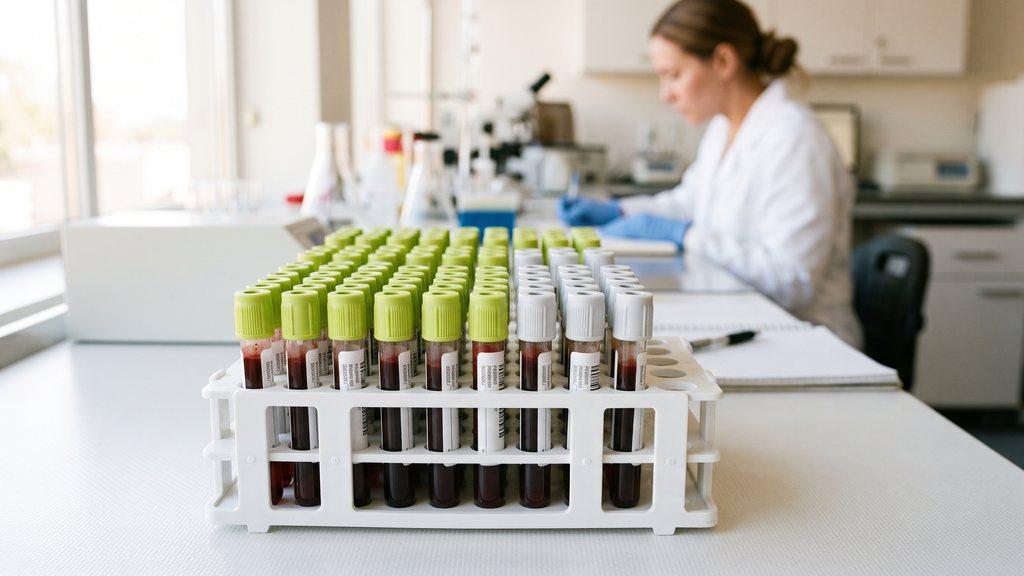
Labs do two jobs: confirm androgen excess when symptoms are unclear, and rule out conditions that cause irregular periods or high androgens. The guideline favors total and free testosterone (free testosterone is often calculated using SHBG) as the first-line androgen tests. Our lab panels cover many of these markers, and metabolic health blood markers explains the metabolic ones in more depth.
Total and free testosterone
- Why it is checked
- Confirms androgen excess
SHBG
- Why it is checked
- Used to calculate free testosterone; often low with insulin resistance
AMH
- Why it is checked
- Adult alternative to ultrasound for the ovary criterion
TSH
- Why it is checked
- Rules out thyroid disease as a cause of cycle changes
Prolactin
- Why it is checked
- Rules out high prolactin, which can stop ovulation
17-hydroxyprogesterone
- Why it is checked
- Screens for nonclassic congenital adrenal hyperplasia
hCG (pregnancy test)
- Why it is checked
- Rules out pregnancy as a cause of missed periods
A1c or oral glucose tolerance test
- Why it is checked
- Screens for prediabetes and type 2 diabetes
Lipid panel
- Why it is checked
- Checks cholesterol and triglycerides for heart risk
| Test | Why it is checked |
|---|---|
| Total and free testosterone | Confirms androgen excess |
| SHBG | Used to calculate free testosterone; often low with insulin resistance |
| AMH | Adult alternative to ultrasound for the ovary criterion |
| TSH | Rules out thyroid disease as a cause of cycle changes |
| Prolactin | Rules out high prolactin, which can stop ovulation |
| 17-hydroxyprogesterone | Screens for nonclassic congenital adrenal hyperplasia |
| hCG (pregnancy test) | Rules out pregnancy as a cause of missed periods |
| A1c or oral glucose tolerance test | Screens for prediabetes and type 2 diabetes |
| Lipid panel | Checks cholesterol and triglycerides for heart risk |
Timing and medications affect results. Hormonal contraception lowers androgen levels and raises SHBG, so testing is most informative when you are not on it, or your provider will interpret results with that in mind. Very high testosterone or rapidly progressing symptoms, such as a deepening voice, need prompt evaluation for other causes.
How does insulin resistance fit into PCOS?
Many people with PCOS have insulin resistance, meaning the body needs more insulin to keep blood sugar in range. This happens across body sizes, not only with higher weight. High insulin pushes the ovaries to make more androgens and lowers SHBG, which raises free testosterone, worsening hair growth, acne and irregular ovulation. It also raises the long-term risk of type 2 diabetes and heart disease.
That is why the 2023 guideline treats PCOS as a metabolic condition as well as a reproductive one, and recommends screening for diabetes (with an oral glucose tolerance test preferred in higher-risk situations) and checking cardiovascular risk factors such as lipids and blood pressure. Glucose screening is repeated over time rather than done once.
How is PCOS treated?
There is no single PCOS drug. Treatment is built around your priorities, and most options are used off-label for PCOS, meaning outside the uses on their FDA labels. Your prescriber chooses and sets the dose.
- Lifestyle. A sustainable eating pattern, regular activity and good sleep improve insulin sensitivity, and even modest weight loss in people with higher weight can improve cycles and metabolic markers. The guideline stresses avoiding weight stigma.
- Combined oral contraceptive pill. Regulates cycles, protects the uterine lining from irregular shedding, and lowers androgen symptoms. FDA-approved for contraception (some products also for acne); widely recommended for PCOS symptoms.
- Metformin. A diabetes medication used off-label in PCOS to improve insulin resistance and metabolic features, alone or with the pill. Stomach upset is common.
- Spironolactone. An off-label anti-androgen for hirsutism, acne and hair thinning, usually added when the pill alone is not enough. It must not be used in pregnancy because of possible effects on a male fetus, so reliable contraception is required. See our spironolactone guide.
- GLP-1 medicines. Semaglutide and tirzepatide are FDA-approved for chronic weight management in eligible adults, not for PCOS itself. For people with PCOS and higher weight, they may help with weight and insulin resistance; they are not for use during pregnancy or when trying to conceive. See our women's weight program.
- Letrozole for fertility. An aromatase inhibitor used off-label to induce ovulation. In a large randomized trial of 750 women with PCOS, letrozole led to more live births than clomiphene (27.5% vs. 19.1%), and the 2023 guideline recommends it as first-line medication for ovulation induction. This is managed by a fertility or reproductive specialist.
Does PCOS change with age?
Cycles often become more regular as women approach their forties, but the metabolic side of PCOS does not go away, so blood sugar, lipids and blood pressure stay worth monitoring. PCOS symptoms can also overlap with perimenopause, especially irregular bleeding and hair changes. If you are in your forties and unsure which is driving your symptoms, the perimenopause symptom check is a useful starting point.
What an evaluation looks like
A provider will take a menstrual and symptom history, ask about family history of diabetes, review weight and blood pressure, and order labs to confirm androgen excess and exclude look-alikes. On our women's programs, including women's hormone care and weight care, visits start with a licensed physician by live video, labs can be arranged, and any prescription is filled by a licensed US pharmacy. Compounded formulations are not FDA-approved. If pregnancy is your goal, you may be referred to a fertility specialist.
Common questions
Can you have PCOS without cysts on your ovaries?
Yes. Under the Rotterdam criteria, irregular ovulation plus high androgens is enough for a diagnosis, with no ovarian findings needed. The so-called cysts are actually small follicles, and many people with PCOS do not have them on ultrasound.
What blood tests diagnose PCOS?
No single test does. Total and free testosterone (with SHBG) confirm androgen excess, and TSH, prolactin, 17-hydroxyprogesterone and a pregnancy test rule out look-alikes. In adults, AMH can stand in for ultrasound, and A1c or a glucose tolerance test plus lipids check metabolic health.
Is metformin FDA-approved for PCOS?
No. Metformin is FDA-approved for type 2 diabetes and is used off-label in PCOS to improve insulin resistance and metabolic features. A prescriber decides whether it fits and sets the dose.
Can GLP-1 medications help PCOS?
They are not approved for PCOS, but semaglutide and tirzepatide are FDA-approved for weight management in eligible adults and may help people with PCOS and higher weight. They should be stopped before trying to conceive, on your prescriber's advice.
Can I take spironolactone if I want to get pregnant?
No. Spironolactone should be avoided in pregnancy because animal studies showed effects on male fetal development, so reliable contraception is needed while taking it. Talk to your prescriber before stopping contraception.
Does PCOS go away after menopause?
Cycle irregularity becomes less relevant, but the metabolic risks associated with PCOS, such as type 2 diabetes and heart disease, persist. Ongoing checks of blood sugar, lipids and blood pressure remain important.
Sources
- Teede HJ, et al. Recommendations from the 2023 International Evidence-based Guideline for the Assessment and Management of PCOS. J Clin Endocrinol Metab, 2023 Link (opens in a new tab)
- Rotterdam ESHRE/ASRM-Sponsored PCOS Consensus Workshop Group. Revised 2003 consensus on diagnostic criteria for PCOS. Fertil Steril, 2004 Link (opens in a new tab)
- Legro RS, et al. Letrozole versus clomiphene for infertility in the polycystic ovary syndrome. N Engl J Med, 2014 Link (opens in a new tab)
- International evidence-based recommendations for polycystic ovary syndrome in adolescents. BMC Med, 2025 Link (opens in a new tab)
- MedlinePlus. Polycystic ovary syndrome Link (opens in a new tab)
- ACOG. Polycystic ovary syndrome (PCOS) patient FAQ Link (opens in a new tab)
- Spironolactone tablets, prescribing information (DailyMed) Link (opens in a new tab)
This article is for general education and is not medical advice. Protocols described here require an online consultation with a licensed provider who will determine if a prescription is appropriate for you. Explore hormones options or read the FAQ.