Still Hungry on Semaglutide or Tirzepatide? Here's Why

Key takeaways
- Feeling hungry on a GLP-1 is common in the first weeks, when the dose is still low and blood levels are still building.
- Later on, persistent hunger usually traces to low protein or fiber, long gaps between meals, short sleep, thirst, or the last day or two before your next weekly dose.
- Physical hunger builds gradually and is satisfied by most foods; food noise and cravings tend to be sudden, specific and tied to cues like stress or boredom.
- Protein-forward meals, high-fiber foods, regular meal timing and steady hydration are the first things to try.
- If hunger is strong after several months at a tolerated dose, talk to your provider. Never raise your dose on your own.
You can still feel hungry on semaglutide or tirzepatide because these medications reduce appetite rather than switch it off, and their effect is weakest in the first weeks while the dose is low. Later in treatment, ongoing hunger usually points to something specific: meals that are low in protein or fiber, long gaps without food, poor sleep, mistaking thirst for hunger, or appetite creeping back in the day before a weekly injection.
Some hunger is healthy. Your body still needs fuel, and a medication that left you with no appetite at all would make it hard to eat enough protein and nutrients. The goal is hunger that is manageable and matches your needs. This guide explains the common causes and what to try, and when it is time to bring it to your provider.
Is it normal to be hungry on a GLP-1?
Yes, especially early on. GLP-1 medications are started at low doses chosen for tolerability and raised gradually over months. At the starting dose, many people notice only a mild change in appetite. Weekly medications also take several weeks to build up to a steady level in the blood at each dose, so appetite effects strengthen over time rather than all at once.
Studies of the weight-management dose of semaglutide found that people ate noticeably less at a self-selected meal and reported fewer cravings than people on placebo, but they still ate and still felt hunger. Treatment is meant to shift your appetite toward what your body needs, not to replace eating. For what each stage usually feels like, see how long semaglutide takes to work.
Is it real hunger or food noise?
It helps to separate physical hunger from cravings, because they respond to different fixes. Many people on GLP-1 medications describe a drop in 'food noise', the constant background thinking about food, even when physical hunger remains.
How it starts
- Physical hunger
- Gradually, a few hours after eating
- Food noise or cravings
- Suddenly, often after a cue
What sounds good
- Physical hunger
- Most foods, including plain ones
- Food noise or cravings
- A specific food, usually sweet or salty
Body signs
- Physical hunger
- Stomach emptiness, low energy, irritability
- Food noise or cravings
- Few physical signs
Common triggers
- Physical hunger
- Long gap since a meal, small or low-protein meal
- Food noise or cravings
- Stress, boredom, screens, alcohol, habit
What helps
- Physical hunger
- A balanced meal or snack
- Food noise or cravings
- A pause, a walk, a glass of water, a planned alternative
| Signal | Physical hunger | Food noise or cravings |
|---|---|---|
| How it starts | Gradually, a few hours after eating | Suddenly, often after a cue |
| What sounds good | Most foods, including plain ones | A specific food, usually sweet or salty |
| Body signs | Stomach emptiness, low energy, irritability | Few physical signs |
| Common triggers | Long gap since a meal, small or low-protein meal | Stress, boredom, screens, alcohol, habit |
| What helps | A balanced meal or snack | A pause, a walk, a glass of water, a planned alternative |
If most of what you feel is physical hunger, look at what and when you are eating. If most of it is cravings, routines and environment matter more than the medication.
What eating patterns keep you hungry?
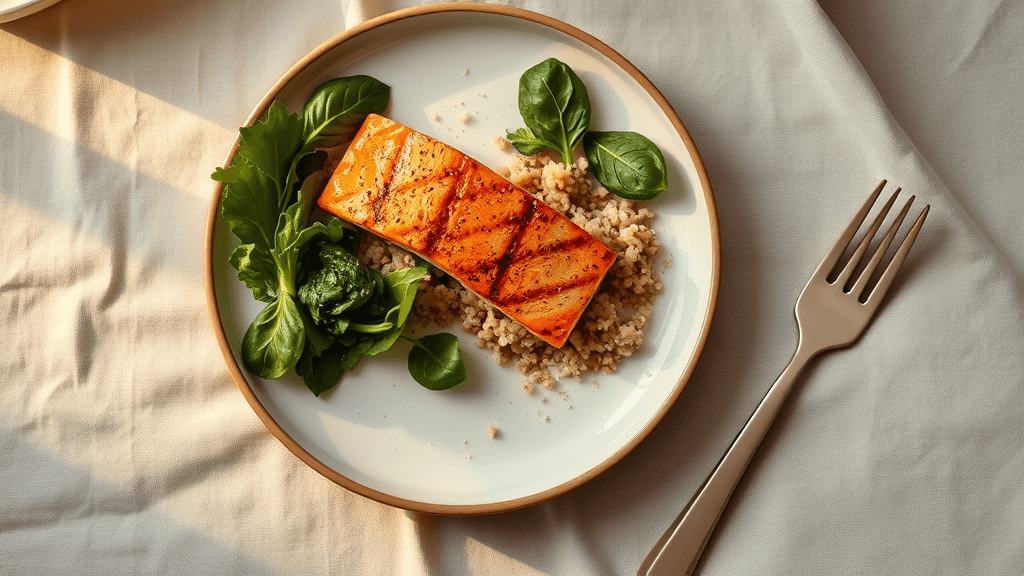
The biggest diet-related causes of persistent hunger on a GLP-1 are low protein, low fiber and irregular meals. Because you are eating less overall, the makeup of each meal matters more than before.
- Low protein. Protein is the most filling macronutrient, and research on weight loss consistently links higher-protein diets with better fullness and muscle retention. Our protein calculator gives a daily target range with a GLP-1 mode.
- Low fiber. Vegetables, beans, lentils, berries and whole grains add bulk and slow digestion. Fiber also helps with constipation, a common GLP-1 side effect.
- Refined carbohydrates on their own. Crackers, white bread, sweets and juice digest quickly and can leave you hungry again within an hour or two.
- Skipping meals. Going many hours without food because you are not hungry in the morning can lead to strong hunger in the evening. Small, regular meals work better for many people.
- Eating too fast. GLP-1 medications slow stomach emptying, but fullness signals still take time to arrive. Slower meals give them a chance.
Our guide on what to eat on a GLP-1 turns these principles into simple meal patterns.
Can sleep, stress or thirst make you hungrier?
Yes, all three can. Short sleep is one of the best-documented drivers of appetite: in a classic controlled study, two nights of restricted sleep lowered the fullness hormone leptin, raised the hunger hormone ghrelin, and increased reported hunger, particularly for calorie-dense foods. If your hunger is worst after poor nights, sleep may be the lever to pull.
Stress raises cortisol and pushes many people toward comfort foods, and it often shows up as cravings rather than true hunger. Thirst is also easy to mistake for hunger, and people on GLP-1 medications may drink less because they feel full. A glass of water before reaching for a snack is a simple test. Our water intake calculator gives a daily target.
Why is hunger worse the day before my next dose?
Some people notice appetite returning in the last day or two before their weekly injection. Blood levels of weekly GLP-1 medications are designed to stay relatively steady, but they are naturally a little lower at the end of the dosing interval, and some people seem more sensitive to that dip.
If you notice a pattern, track it for a few weeks and share it with your provider. Do not shorten the interval between doses or add extra doses on your own; that raises the risk of side effects such as nausea and vomiting. Planning higher-protein meals for those days is a safe first step.
When should you talk to your provider about hunger?
Bring it up if hunger stays strong after about three months at a dose you tolerate, if it is getting in the way of your goals, or if it changes suddenly. A provider can check whether you are still in the dose-escalation phase, whether the dose is right, whether another medication is affecting appetite, and whether lab work is due.
Possible next steps include holding steady, adjusting the dose within the labeled range, or switching to a different medication. Some people who respond modestly to a single-pathway GLP-1 do better on a dual-agonist, and some find the opposite. On our Metabolic Programs, a licensed provider decides whether any medication is appropriate and manages every change. Compounded GLP-1 medications are not FDA-approved; FDA-approved versions exist.
Common questions
Does being hungry mean the GLP-1 is not working?
No. Hunger does not mean failure, particularly in the first months while the dose is rising. The medication reduces appetite rather than removing it. The better measures of whether it is working are your weight trend, waist measurement and blood sugar over several months, reviewed with your provider.
What snacks help with hunger on a GLP-1?
Snacks that pair protein with fiber tend to hold you longest: Greek yogurt with berries, cottage cheese with fruit, a hard-boiled egg with vegetables, edamame, hummus with carrots, or a small portion of nuts with an apple. Liquid snacks like juice or sweetened coffee drinks are less filling for the calories.
Can I take an appetite suppressant along with my GLP-1?
Do not add any appetite suppressant, supplement or other weight-loss medication without talking to your prescriber. Some combinations raise heart rate or blood pressure, some interact with other medications, and many supplements are not tested for safety or contents. Your provider can tell you what is reasonable for you.
Why am I hungry at night on semaglutide?
Evening hunger is often the result of eating too little earlier in the day, especially if breakfast or lunch are skipped because appetite is low. Tiredness, stress and screens add cravings on top. A protein-forward breakfast and lunch and a planned evening meal usually make nights calmer.
Is it safe to eat when I am not hungry on a GLP-1?
It is often wise to eat regular, modest meals even with little appetite, because very low intake raises the risk of muscle loss, fatigue, dizziness and nutrient gaps. Small portions eaten slowly are usually better tolerated. If you can barely eat at all, tell your provider.
Will switching to tirzepatide stop the hunger?
Possibly, but not certainly. In a head-to-head trial, tirzepatide produced larger average weight loss than semaglutide, but individual responses vary in both directions. Switching also means a new dose plan and new side effects to manage. See our guide to switching from semaglutide to tirzepatide.
Sources
- Friedrichsen M, Breitschaft A, Tadayon S, et al. The effect of semaglutide 2.4 mg once weekly on energy intake, appetite, control of eating, and gastric emptying in adults with obesity. Diabetes Obes Metab. 2021;23:754–762. Link (opens in a new tab)
- Spiegel K, Tasali E, Penev P, Van Cauter E. Sleep curtailment in healthy young men is associated with decreased leptin levels, elevated ghrelin levels, and increased hunger and appetite. Ann Intern Med. 2004;141:846–850. Link (opens in a new tab)
- Leidy HJ, Clifton PM, Astrup A, et al. The role of protein in weight loss and maintenance. Am J Clin Nutr. 2015;101:1320S–1329S. Link (opens in a new tab)
- Mozaffarian D, Agarwal M, Aggarwal M, et al. Nutritional priorities to support GLP-1 therapy for obesity: a joint advisory. Am J Clin Nutr. 2025;122:344–367. Link (opens in a new tab)
- Semaglutide injection for chronic weight management: prescribing information (DailyMed, National Library of Medicine). Link (opens in a new tab)
- Aronne LJ, Horn DB, le Roux CW, et al. Tirzepatide as compared with semaglutide for the treatment of obesity (SURMOUNT-5). N Engl J Med. 2025;393:26–36. Link (opens in a new tab)
This article is for general education and is not medical advice. Protocols described here require an online consultation with a licensed provider who will determine if a prescription is appropriate for you. Explore weight & metabolic options or read the FAQ.